


Cetus Maritime Targets Up to $200 Million in Oslo as Shipping Heavyweights Signal Interest

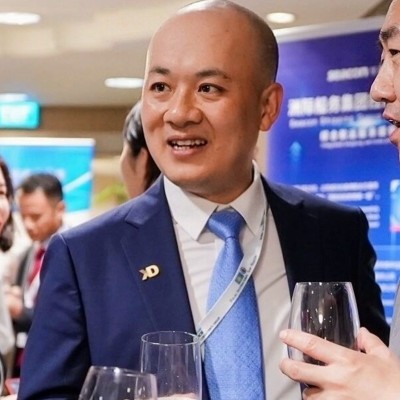
Hong Kong-based dry-bulk operator Cetus Maritime has launched a $175 million private placement ahead of a planned debut on Euronext Growth Oslo around 18 November, with an over-allotment arrangement potentially taking the offering to approximately $200 million. Four investor groups, including interests linked to Idan Ofer, Arne Blystad and Magnus Halvorsen, have indicated an intention to subscribe for a combined $106.5 million. The financing would support fleet acquisitions, newbuilding payments and debt reduction as Cetus prepares to enter the public equity market.
The proposed offering brings together several strands of the company’s development: consolidation of regional shipping businesses, investment in fleet renewal and expansion of its global cargo network. It also follows the approach described by chief executive Mark Young in interviews with Xinde Marine News earlier this year, when he emphasised cash flow, leverage discipline and the commercial and cultural fit of potential acquisitions.

Industry Capital and Asset Managers Signal Interest
The four investor groups named by Cetus are an affiliate of Ofer’s Eastern Pacific Shipping, Blystad’s Songa Capital, London-based Albemarle Shipping Fund, which is backed by shipping investor Halvorsen, and DNB Asset Management. Together, they have indicated an intention to subscribe for $106.5 million at the offer price. Their participation would bring a mix of shipping industry capital and professional asset managers into the shareholder base.
The private placement comprises up to approximately 95.6 million new shares at a fixed price equivalent to $1.83 per share in Norwegian kroner, targeting gross proceeds of about $175 million. The coordinators may also over-allot existing shares worth up to approximately $25 million, borrowed from Cetus’ largest shareholder, Pacific Transportation Asia LLC (PTA), under a share-lending arrangement. A related greenshoe mechanism would provide flexibility for post-listing market stabilisation. Cetus said the indications received from the four named groups and other investors covered the contemplated offering, including the over-allotment, at launch.
The offer price implies an equity value of approximately $239 million before the private placement and the proposed acquisitions, increasing to around $307 million on a pre-money basis when those acquisitions are included. Clarksons Securities and DNB Carnegie are acting as joint global coordinators and joint bookrunners, with Nordea as joint bookrunner. The application period is scheduled to close on 12 November, with allocation notifications expected around 13 November, followed by settlement and admission to trading under the ticker CTUS.
For an operator focused on the Handysize and Ultramax segments, the prospective investors’ familiarity with shipping is relevant to how the business is assessed. Its earnings depend on vessel values and freight markets, as well as the ability to secure cargo, position tonnage and manage voyage exposure. The investor line-up provides an initial indication of interest in that combination of assets and commercial operations.
Fleet Acquisitions and Financing Move Together
The offering is closely connected to a package of pre-listing transactions. Cetus intends to complete arrangements involving 13 Handysize and Ultramax vessels from Seacon Shipping Group and acquire Syngrace Limited from CIMC Qianhai Commerce and Trading Co. Limited. Syngrace holds shipbuilding contracts for three further Handysize vessels. Cetus’ 10 November announcement presented the transactions together, with aggregate consideration comprising approximately $72.53 million in cash and the issue of 37,341,289 Cetus shares to Seacon.
As previously reported by Xinde Marine News, the 13-vessel Seacon package consists of interests in ten vessel-owning subsidiaries, covering five delivered vessels and five newbuildings, together with three vessels to be employed under time-charter arrangements. The five Seacon newbuildings include three 64,000-dwt bulk carriers and two vessels of approximately 40,000 dwt. Adding the three Handysize contracts held by Syngrace gives the combined platform eight newbuildings.
Following completion of the transactions and the sale of a 2013-built vessel during the fourth quarter, Cetus expects to operate a fleet of 42 vessels. This comprises 34 vessels on the water, owned, leased or chartered in, and eight newbuildings scheduled for delivery in 2027 and 2028. The combination gives investors a defined pipeline of incoming vessels alongside the existing operating fleet.
Placement proceeds would finance the cash portion of the acquisitions, the equity component of newbuilding payments, fleet deleveraging, and general corporate and working capital requirements. The share consideration would also extend the relationship with Seacon beyond the transfer of vessels: Seacon would participate in the enlarged business as a shareholder, while Cetus would gain tonnage and a partner with experience in fleet investment and renewal.
A Global Cargo Network Built Through Consolidation
Cetus traces its roots to Oriental Steamship Limited, established in 2004. Asia Maritime Pacific (AMP), founded in 2008, subsequently expanded through a series of combinations. Sono Shipping joined in 2016, adding commercial resources in the Americas and Atlantic markets, while the integration of Fenwick Shipping in 2018 broadened the business in Asia and Oceania.
AMP and Germany’s HBC Hamburg Bulk Carriers announced their merger in late 2022, with the combined Cetus Maritime platform established in January 2023. Chilean operator Nachipa joined in 2024, strengthening the South American business, followed by the integration of longstanding partner Rhumb Maritime in 2025, reinforcing the group’s local presence in Australia and New Zealand. These transactions brought together regional customer relationships, operating teams, vessels and market knowledge.
That commercial network is central to the business model. Handysize vessels carry diverse cargoes and frequently call at ports with differing infrastructure and cargo-handling capabilities. Access to local cargo, the sequencing of voyages and the positioning of vessels between regions can materially affect earnings. Local teams’ understanding of customers, ports and handling requirements feeds into decisions about the deployment of the wider fleet.
In its 10 November announcement, Cetus described itself as a cargo operator, transporting a diversified book of dry-bulk cargoes using owned and chartered-in tonnage, primarily in spot and short-term charter markets. Its cargo base includes steel products, grains, agricultural products, concentrates and forest products. No single cargo accounts for more than 15% of annual cargo carried, and no single customer represents more than 10% of the overall business. This spreads the sources of demand while requiring the commercial team to continually match cargo commitments with available ships and manage voyage risks.
The pre-listing fleet expansion will therefore need to work within this network. The returns on incoming vessels will depend on the cargoes they secure, their utilisation and how effectively they can be deployed across the company’s trading regions.
Cash Flow and Leverage Guide Fleet Investment
Speaking at the EMC2026 shipping conference in Suzhou in May, Young distinguished the vessel supply-and-demand cycle from the broader economic cycle. He expressed a degree of optimism about dry bulk while stressing the importance of cash flow and leverage management. Asked how owners should choose between newbuildings and secondhand vessels when ship prices are high, he placed stable cash generation at the centre of the decision and described Cetus’ recent emphasis on younger, fuel-efficient secondhand tonnage and corporate combinations.
In a subsequent interview with Xinde Marine News, Young explained that Cetus had no clearly defined plan for a large direct newbuilding programme at that time. The company nevertheless maintained discussions with Chinese ship investment partners about cargo requirements, vessel design and suitability for future trades. When considering acquisitions, he emphasised whether the parties’ customer bases, operating philosophies, cultures and approaches to risk management were compatible.

The proposed transactions follow a related path. Acquiring vessel-owning interests and existing newbuilding contracts, alongside time-charter arrangements, gives Cetus access to future capacity through a combination of ownership and commercial employment. The proposed equity raise would provide funding for cash consideration, construction payments and debt reduction. Seacon’s receipt of shares would give it a continuing financial interest in the enlarged platform, connecting the fleet transaction with a longer-term relationship.
Oslo Offers a Market Familiar with Shipping
Oslo gives Cetus access to a capital market with an established community of shipping companies, specialist investors, research analysts and financial advisers. Net asset value, charter coverage, spot exposure, newbuilding commitments and capital returns are familiar subjects in that market. This industry knowledge can help a company explain how its assets, commercial operations and funding requirements fit together.
Recent transactions show the scale and range of shipping businesses seeking capital there. In March, Capital Tankers completed a private placement of approximately $500 million ahead of its Euronext Growth Oslo listing, with 21 of its 30 vessels under construction at admission. Trafigura-backed Volare Shipping followed in October with a base private placement of about $500 million and a fleet comprising six operating VLCCs and eight VLCC newbuildings. Both offerings demonstrated the market’s capacity to finance fleets with substantial future deliveries.
Other listings offer different forms of shipping exposure. OMC Tankers was spun off and admitted to trading in August with eight VLCC newbuildings in China at the centre of its asset portfolio. Pelagic Credit, which listed in March, focuses on long-term bareboat charters and shareholder distributions. Their differing asset structures and earnings arrangements illustrate the range of business models available to specialist investors.
Euronext Growth Oslo also offers a relatively flexible admission process and an established practice of combining private placements with admission to trading. For shipowners, the ability to coordinate funding with acquisition closings and vessel payments can influence the execution of an investment. Cetus’ proposed timetable links its fleet transactions, equity placement and admission in this way.
Listed Shares Could Support Further Acquisitions
For a company that has grown through consolidation, access to public equity could support further transactions. Shares with an observable market price can form part of an acquisition payment, allowing a regional owner or asset seller to receive cash while retaining exposure to the enlarged business. The proposed Seacon transaction provides a practical example of that structure.
Sustaining this financing capacity will require a record of operating performance and disciplined capital allocation. Vessel assets provide a basis for valuation; the contribution of customer relationships and commercial teams must become visible in utilisation, voyage earnings, cash generation and returns on invested capital. For an operator working mainly in spot and short-term markets, investors will be able to assess whether the regional network improves the matching of ships and cargoes and whether acquired teams work effectively together.
Management will also need to allocate capital among fleet renewal, acquisitions, debt reduction and shareholder returns. According to the 10 November announcement, PTA holds approximately 86% of Cetus’ existing shares before the placement. The company, PTA and Seacon are subject to relevant six-month lock-up arrangements, while directors and senior management have corresponding 12-month lock-ups. The final shareholder structure will emerge as the placement and associated transactions are completed.
Cetus is working towards admission around 18 November, subject to the acquisition closings, corporate approvals and exchange admission requirements. Completion of the financing and fleet integration would give the company a broader capital base and a pipeline of new vessels. The operating test will then be how effectively those ships are employed across its cargo network, and how consistently the enlarged business converts that activity into cash flow and capital returns through changing freight markets.


READ MORE
 Finance
Has the Mega-Ship Era Peaked? Investment Choices Behind Shipping’s Boom
 Finance
Xingtong Posts 59% Profit Jump as Its Chemical Tanker Business Goes Global
 Finance
Maersk Posts USD 3 Billion Quarterly Profit but Still Misses Expectations
 Finance
Ships Built for 25 Years, Rules Still Evolving: How Should Owners Invest?
 Finance
NORDEN Doubles Q3 Profit as Fleet Strategy Begins to Deliver
 Finance
Nanjing Tanker Posts US$171 Million Nine-Month Profit as Fleet Renewal Accelerates
 Finance
Guohang’s Fleet Investments Begin to Pay Off as Nine-Month Profit Reaches US$30 Million
 Finance
US$6.06 Billion in Nine Months: COSCO SHIPPING’s Three Major Listed Shipping Platforms Gain Momentum | LinkedIn
 Finance
COSCO SHIPPING Energy Earns US$1.10 Billion as Tanker Volumes Fall
 Finance