


Ships Built for 25 Years, Rules Still Evolving: How Should Owners Invest?

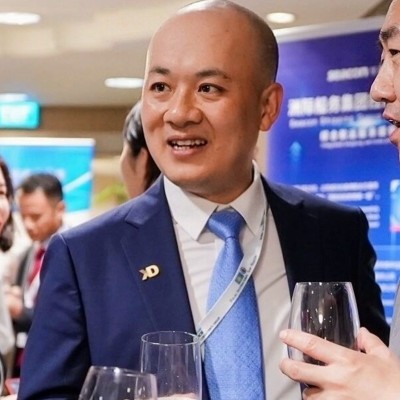
Green shipping investment requires shipowners and financiers to assess decades of earnings against changing fuel prices, carbon costs, technology and trade demand. At the Marine Money China Ship Finance Forum in Shanghai on 3 November, presentations and a panel discussion on climate risk and fleet investment examined how capital committed to a vessel can continue to earn a return under different regulatory and market conditions.
BOC Financial Leasing’s Deputy General Manager of the Business Approval Department, Felix Song, captured the difficulty: “The problem is not working out today’s numbers, but understanding tomorrow’s rules.” For owners, investors and lenders, the assessment extends across a ship’s lifecycle, encompassing cash flow, retrofit expenditure, marketability and the eventual exit.

A presentation by @Marie Fricaudet, Senior Research Fellow at the UCL Shipping and Oceans Research Group, and a fleet investment panel moderated by Yiyang Li, Principal Consultant at DNV Maritime Advisory, pointed towards a common approach: improve performance that can be verified, preserve the ability to adapt, and embed that flexibility in vessel design, operations and financing.
Global negotiations continue while regional carbon costs affect operations
Regulatory uncertainty formed an important starting point for the discussion. At the time of the forum, the IMO Net-Zero Framework had yet to be formally adopted. According to the IMO’s published schedule, further work was planned for late November and early December. The second extraordinary session was scheduled to resume on 4 December, subject to confirmation by the Marine Environment Protection Committee’s 85th session.
European decarbonisation requirements already affect operating costs. Maritime transport entered the EU Emissions Trading System in 2024. The surrender obligation in 2026 covers 70% of the relevant emissions reported for 2025, rising to 100% of the relevant reported emissions from 2027 onwards. FuelEU Maritime has applied in full since 2025, setting requirements for the annual average lifecycle greenhouse gas intensity of energy used on board.
This combination creates a demanding investment environment. The eventual strength and implementation of global measures remain under discussion, regional obligations are established, and ships need to trade across different markets. The economics of a technology can therefore vary with the vessel’s routes, fuel supply and applicable regulation.

SeaKapital Chief Financial Officer Mark Teng described the consequences for day-to-day decisions. Voyage economics require an assessment of employment, hire and operating expenditure alongside bunkering arrangements, surcharges and carbon costs associated with European trading. These additional variables require closer coordination between finance, chartering and bunker management.
Energy efficiency offers a practical investment starting point
For Zhiyong Zhou, Vice President of the Shanghai Merchant Ship Design and Research Institute (SDARI), the technical response begins with balancing reliability, efficiency and cost in a vessel that can be delivered and operated successfully. He described the institute’s work in computational fluid dynamics, structural analysis and optimisation, and digital support for operations. Hull, structural and propulsion improvements also feature in its conventional-fuel designs.

The investment logic is straightforward. Lower energy requirements can improve operating economics across different fuel pathways. Their value may become more pronounced when low-carbon fuels are expensive. Better design and energy-saving equipment can reduce fuel expenditure and carbon costs linked to the quantity of emissions. Compliance with fuel greenhouse gas intensity requirements still needs to be assessed through the fuel actually used and the wider compliance arrangements.
Song said energy-saving equipment receives particular attention in investments involving existing ships and newbuildings because its contribution is easier to assess than the eventual fuel pathway. Li similarly identified technologies that already improve performance as measures owners can implement.
The forum’s separate Venergy interview provided a practical example. @Venergy Maritime Group Chief Financial Officer Andreas Giakoumelos explained that the company is investing in efficient conventional-fuel vessels incorporating modern technology, with close attention to their appeal to charterers. Its approach illustrates an investment sequence adopted by some owners: establish competitive operating assets while continuing to assess future technology and fuel choices.
Returns from efficiency investment nevertheless depend on performance in service. Li specifically raised the gap between design simulations and actual operations. Zhou emphasised validation through early projects and feedback from owners, yards and equipment suppliers. The investment case therefore needs to establish how much energy a system saves under actual speeds, loading conditions and routes, and how reliably those savings can be sustained.
Fuel choices gain value from the flexibility they preserve
Teng said SeaKapital has invested in methanol-ready chemical tankers and entered the LNG bunkering vessel market. Fuel availability and operational maturity are central to its assessment, alongside the ability to preserve options within its assets.
These decisions reflect two connected sources of investment demand. Owners require propulsion systems and fuels for their transport vessels, while those vessels also need energy services. LNG dual-fuel ships entering operation generate bunkering requirements, creating demand for bunker vessels and associated infrastructure. Investment in the transition consequently extends beyond the ships carrying commercial cargo.
Teng also questioned whether a technology that is mature can support a vessel through another two or three decades of operation. Its present operability needs to be assessed alongside its competitiveness under potentially stricter emissions requirements. The compliance performance of LNG also depends on the energy system and its emissions characteristics. The European Commission’s FuelEU Maritime guidance makes clear that the outcome depends on factors including the energy system used and the type and quantity of pilot fuel.
Zhou’s discussion of green methanol and ammonia raised related questions about availability, price and equipment reliability. Fuel selection requires an assessment of the entire operating process, covering delivery, bunkering, maintenance and subsequent upgrades. Changes at any of these stages can alter the expected return.
A fuel-ready design therefore needs a credible conversion plan behind it. Investors need to understand which systems would be replaced, how much space is reserved, the capital required, the likely off-hire period, and the fuel and employment opportunities available after conversion. The more clearly these conditions are defined, the easier it becomes to assess the commercial value of the flexibility being purchased.
Green investment must perform across several plausible futures
Fricaudet presented an approach that evaluates a vessel across combinations of policy ambition, fuel prices, availability and technology costs. It examines expected costs and competitiveness alongside exposure to adverse outcomes, allowing investors to assess how the same asset might perform under different plausible futures.

The method draws on real options theory. A ship’s ability to switch fuel, undergo conversion or defer expenditure carries economic value. Investors must weigh the cost of preserving those choices against the losses they could help avoid. UCL’s public description of the framework similarly identifies fuel switching, retrofitting and deferred investment as sources of adaptability.
One finding discussed in the presentation deserves particular attention. With other factors held broadly equal, an older vessel may have lower transition risk over its remaining life because it overlaps for less time with potentially stringent future policies. The measure concerns the duration of that exposure; a purchase decision also requires an assessment of fuel consumption, maintenance, surveys and subsequent employment.
For a newbuilding, a long operating life entails exposure to successive regulatory changes. Retrofit capability, energy efficiency and fuel adaptability therefore need to be assessed over the intended holding period, with sufficient attention to the conditions the vessel may encounter well after delivery.
Fricaudet also distinguished risks arising from a vessel’s own energy use and emissions from those associated with the cargo it transports. The energy transition can change fossil-fuel trade and the long-term demand for the ships serving it. In the climate-aligned scenarios she discussed, the relatively young age and long lives of LNG carriers make their prospects particularly sensitive to assumptions about future gas trade.
An LNG-fuelled transport vessel, an LNG bunker vessel and an LNG carrier consequently require different demand assessments. They serve fuel demand, bunkering demand and commodity transport demand respectively. Evaluating a green investment means examining both how the ship operates and the cargo or service requirements that will support its revenue.
Financiers are reassessing residual value and exit conditions
For financiers, technology choices ultimately enter calculations of asset value and debt protection. Song emphasised vessel marketability and the need for continuing assessment of both the owner and the asset throughout the investment lifecycle.
He placed particular emphasis on residual value. Historical scrap prices and secondhand transactions provide valuation references, but their relevance needs to be tested against changes in fuel, regulation and technology. He suggested that a more dynamic approach to residual value assumptions merits further discussion between financial institutions and owners.
The question becomes concrete at the end of a financing period: who will buy the ship, what will they pay, and how much additional capital will they need to commit? The trades available to a subsequent buyer, access to fuel, compliance costs and the difficulty of conversion can all influence resale conditions.
The financial value of green investment can therefore emerge at several points during ownership. It may reduce energy expenditure, preserve employment choices when markets change, and affect the range of prospective buyers at exit. Reliable financing assumptions require evidence for those benefits through operating performance, fuel arrangements, charter terms and conversion costs.
Teng also observed that high vessel values and yard quotations can make retrofit expenditure appear more manageable as a proportion of the overall asset value. Investors still need to establish the additional income or savings that expenditure can generate, and whether it can be recovered within the remaining holding period. The comparison changes with asset prices; the return must be supported by future cash flow.
Green shipping corridors influence where capital is allocated
The forum’s macroeconomic panel extended the investment discussion to ports and shipping networks. Hong Kong Liner Shipping Association Chairman Roberto Giannetta argued that green shipping corridors are signalling where future fuel supplies, infrastructure and operating standards may develop, and are beginning to influence capital allocation.
Reliable cargo flows remain a central consideration in port selection. Incorporating decarbonisation requires investors to assess access to suitable energy, supporting facilities and compatible regulatory conditions as well. Giannetta identified Chinese ports’ participation in green shipping corridors as one way China is influencing the future structure of maritime investment.
This makes fuel selection a more specific commercial exercise. The same vessel type may encounter different fuel availability and costs on different routes. A port’s energy services can also affect where and how a ship can be deployed. Vessel, port and fuel investments are consequently becoming more closely connected.
For businesses involved in China’s maritime sector, these connections span shipbuilding, design, equipment, energy supply and financing. Delivering a project requires coordination around actual services: when the ship arrives, when fuel becomes available, whether bunkering facilities can support it, and how owners and charterers structure its employment. The signals sent by a green corridor must ultimately be translated into operating and investment commitments.
The shipping cycle still determines the capacity to invest
Despite the focus on technology and fuel, Teng identified global trade and economic activity as fundamental to freight income. Efficient and alternative-fuel vessels still require cargo, employment and adequate cash flow. Strong earnings can also temporarily reduce owners’ sensitivity to the costs associated with less efficient assets.
Green investment therefore needs to withstand changes in technology and the shipping cycle together. High earnings can support cash accumulation, debt repayment and retrofit programmes. Weaker income brings the relationship between additional capital expenditure, fuel costs and financing obligations into sharper focus. A project that appears affordable in a strong market still needs to be tested against lower revenue and higher costs.
The forum brought together different perspectives on the same long-term commitment. Designers focus on performance and reliability, operators on fuel and employment, and financiers on cash flow, marketability and residual value. Assessing those conditions together makes the expected return easier to understand.
For a vessel intended to operate for 25 years, practical preparation means verifiable efficiency, executable conversion plans, fuel arrangements suited to its trading routes, and financing that leaves capacity to respond. Each regulatory change, shift in fuel economics and turn in the market will test how well those preparations support the investment.


READ MORE
 Finance
Has the Mega-Ship Era Peaked? Investment Choices Behind Shipping’s Boom
 Finance
Xingtong Posts 59% Profit Jump as Its Chemical Tanker Business Goes Global
 Finance
Maersk Posts USD 3 Billion Quarterly Profit but Still Misses Expectations
 Finance
Cetus Maritime Targets Up to $200 Million in Oslo as Shipping Heavyweights Signal Interest
 Finance
NORDEN Doubles Q3 Profit as Fleet Strategy Begins to Deliver
 Finance
Nanjing Tanker Posts US$171 Million Nine-Month Profit as Fleet Renewal Accelerates
 Finance
Guohang’s Fleet Investments Begin to Pay Off as Nine-Month Profit Reaches US$30 Million
 Finance
US$6.06 Billion in Nine Months: COSCO SHIPPING’s Three Major Listed Shipping Platforms Gain Momentum | LinkedIn
 Finance
COSCO SHIPPING Energy Earns US$1.10 Billion as Tanker Volumes Fall
 Finance