


An $81 Million Quote for One Voyage: How Long Can the Tanker Market Frenzy Last?
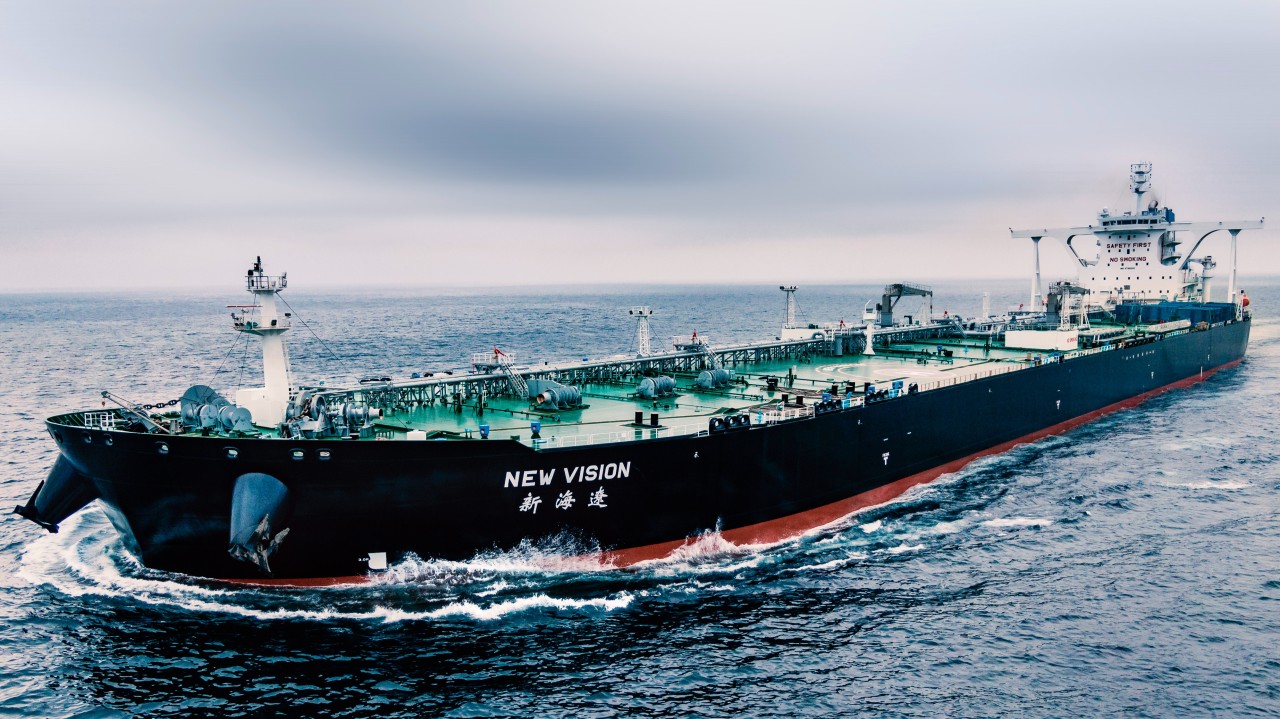

An $81 million provisional freight deal has emerged for a very large crude carrier (VLCC) transporting a cargo from the US Gulf Coast to Asia. Meanwhile, the Baltic Exchange’s composite VLCC time-charter equivalent (TCE) earnings reached $937,767 per day on October 8. The figure edged down to $936,646 on October 9, remaining close to $940,000 per day, while TCE on the Persian Gulf–China route held above $1.41 million per day.
These earnings have also fed through to vessel values. Baltic Exchange indicators for October 9 put a five-year-old VLCC at $182.5 million, approximately 45% above the corresponding newbuilding price indicator of $125.875 million. The premium for existing ships over vessels awaiting construction and delivery reflects the scarcity of immediately available capacity.
Read alongside market material from energy and commodity price reporting agency Argus and commodity and shipping data provider Kpler, these figures point to several forces driving the market: Asian buyers competing for crude supplies, changing trade routes, longer vessel commitments caused by diversions and ship-to-ship transfers, and high earnings prompting cargoes and ships to move between market segments. The global tanker fleet continues to transport crude oil and refined products, but completing the same transport task increasingly requires more ships and more time.
Up 350.8% in Three Months, With High Earnings Across Several Loading Regions
According to the historical VLCC composite TCE data supplied to Xinde Marine News by the Baltic Exchange, the indicator stood at $207,796 per day on July 13 and fell to $187,571 on July 22. Earnings subsequently climbed to $334,066 on August 28, $696,371 on September 30 and $937,767 on October 8.

By October 9, composite TCE had risen 350.8% from July 13 and was approximately five times the late-July low. The increase from September 30 to October 9 alone was 34.5%. The October 9 decline of $1,121, or around 0.12%, was too small to establish that the preceding tightness had eased.
The route assessments for October 9 show the differences between loading regions:

The composite has a defined scope. Under the Baltic Exchange’s benchmark guide, VLTCE is the average of the TCE assessments for TD3C, TD15 and TD22. TD2 and TD34 are excluded. Composite earnings approaching $940,000 per day therefore represent an index calculated from standard routes; the earnings of an individual vessel depend on its contracts, voyage arrangements and costs.
Persian Gulf routes face direct risks to navigation. US Gulf and West African routes are also affected by Asian buyers sourcing alternative supplies, longer voyages and fewer available ships. Although each loading region has its own risk conditions, all draw on a global fleet. When more vessels are tied up in one region, fewer can reach loading windows elsewhere.
The $81 Million Provisional Deal: Both Prices and Fixture Status Are Changing
Argus market material dated October 7 reported that a charterer had placed a VLCC in South Korean shipping company Sinokor’s fleet on subjects at a lump-sum freight rate of $81 million for a US Gulf–Asia-Pacific voyage, with loading scheduled for late November. This was the highest level recorded since Argus began assessing the route in 2017. The transaction remained “on subjects,” meaning that conditions still had to be lifted before the fixture became firm.
Argus also reported a provisional fixture involving a VLCC owned by Sea Jade at $77 million for a US Gulf–South Korea voyage loading in early November. The Baltic Exchange’s TD22 assessment for October 9 was $79,333,333, or approximately $79.33 million, for a 270,000-tonne cargo, equivalent to $293.83 per tonne. Both provisional fixtures and route assessments were at exceptionally high levels, although their destinations, loading dates and contractual terms differed.
Fixture status was also changing. Reuters reported on October 9 that attempts by SK Energy and Trafigura to charter VLCCs at $76 million to $77 million had been unsuccessful. SSY data put US Gulf–China freight at approximately $80 million, equivalent to around $40 per barrel for a two-million-barrel cargo. Some Asian refiners were considering alternative supplies from the Middle East or Latin America.
These developments require continued attention to the final status of reported high-priced fixtures. A freight quote, a provisional fixture on subjects and a fully confirmed transaction represent different stages. Owners and charterers are adjusting their decisions in a rapidly moving market, and a fixture that fails to conclude can alter subsequent vessel availability and quotations.
Freight costs of tens of dollars per barrel are a material constraint on refinery procurement. A crude grade may offer an attractive price at the loading port, yet lose that advantage once shipping costs are included. Buyers must compare crude quality, product yields, arrival dates and transport reliability. As freight rises, some demand may shift to other origins or vessel sizes, or purchases may be deferred. That response will also influence subsequent cargo demand.

More Ships for the Same Cargo: Diversions and Transfers Keep Capacity Occupied
A central feature of the current tanker market is slower vessel turnaround.
Shuttle operations and ship-to-ship transfers around the Strait of Hormuz mean that some crude is first carried out of the strait by one tanker, then transferred in the Gulf of Oman to another ship bound for Asia. Vessels on either side of the strait must coordinate loading, discharge and transfer windows. Cargo waiting, receiving vessels waiting and changes in transfer locations can all extend vessel commitments. Some ships remain engaged in regional shuttle operations, reducing the capacity available to reposition to loading areas such as the US Gulf and West Africa.
These arrangements help sustain crude exports, but increase the vessel resources required for each cargo. A movement previously completed by one ship may now involve several vessels carrying successive legs. Even with an unchanged fleet, fewer transport tasks can be completed within a given period. When new cargoes emerge, charterers face greater difficulty securing suitable ships.
Red Sea diversions further lengthen vessel turnaround. Argus reported on October 7 that DHT Opal had been linked to a $73.9 million lump-sum freight arrangement for a Saudi Yanbu–South Korea voyage loading in late October. Because of Red Sea security risks, the ship would need to sail north from Yanbu through the Suez Canal, head west across the Mediterranean and then round southern Africa before reaching Asia. The route normally takes around 23 days via the Bab el-Mandeb Strait; the diversion takes more than 50 days, adding approximately a month to the laden leg alone.
Citing Vortexa data, Argus said that, as of October 7, 29 VLCCs had taken routes avoiding Bab el-Mandeb to transport Saudi crude from Yanbu or Egypt’s Sidi Kerir to the Asia-Pacific region. Sidi Kerir is an important loading port for Saudi crude exported via the Suez–Mediterranean, or SUMED, pipeline.
These alternative channels maintain some supply, while delaying discharge, ballast returns and the point at which ships can accept their next cargo. A VLCC on a lengthy diversion remains part of the global fleet, but cannot offer capacity within an approaching loading window. The resulting tightness spreads to other regions as cargoes and ships move through the market.
Risk Premiums and Tight Capacity Can Push Freight Higher Even as Volumes Recover
In its October 6 report, Kpler estimated that average VLCC earnings on the Persian Gulf–China route reached approximately $1.01 million per day in September, while noting that earnings continued to incorporate substantial risk premiums. This was a monthly estimate for a particular route, with a different time period and methodology from the October 9 route assessments and composite TCE.
The distinction highlights the need to monitor both transport volumes and the way cargoes are moved. Recovering crude exports create additional loading demand. If those exports still depend on shuttles, transfers or inefficient diversions, each additional cargo may absorb more vessel time. Higher volumes and rising freight can therefore occur together: the efficiency of the supply chain determines how many ships are needed to support the recovery.
Risk also affects available supply. Owners considering a voyage must account for crew safety, war-risk insurance, vessel damage, off-hire exposure and subsequent schedules. Even if the global fleet is large enough in aggregate, the number of ships willing to enter a particular area, acceptable to the charterer and able to arrive within the required loading window may remain limited.
Some of the freight premium compensates for risk, while some reflects the scarcity of ships and time. Both appear in the same quotation. Increasing crude export volumes alone may therefore fail to relieve transport bottlenecks. More reliable navigation, more efficient transfers and greater owner participation could allow additional cargoes to move with a smaller commitment of vessel capacity.
Mid-Sized Tankers Take Split Cargoes, While Dirty Trades Draw Ships Away From Products
High VLCC freight rates are affecting other vessel segments.
Argus noted that a new round of Chinese crude restocking had been gathering pace since late September. With Persian Gulf transport disrupted, refiners sought additional feedstock to meet demand for refined products across the Asia-Pacific region. This initially pushed up rates for mid-sized tankers such as Aframaxes and Suezmaxes, as some charterers divided larger crude parcels into smaller shipments.
Only three VLCCs entered the spot fixture process for US Gulf loading in the second half of September, while demand for mid-sized vessels rose markedly. As rates for those ships increased, their cost advantage over VLCCs narrowed, prompting some cargoes to return to the larger-vessel market. Substitution works in both directions: smaller tankers absorb demand when VLCC rates become too expensive, but rising rates for smaller ships can make VLCCs more attractive again.
The product tanker market is also affected by vessels switching to dirty cargo trades. Kpler reported that, despite 62 new MR tankers being delivered over four months, the fleet trading clean products remained at approximately 1,480 vessels, below the more than 1,500 recorded in May. The number of MRs trading dirty cargoes reached 245.
These figures show why supply must be assessed by the market in which a ship actually operates. When tankers with suitable cargo systems are attracted by higher earnings in dirty trades, fewer vessels remain available for clean products. New deliveries can continue while a particular segment still experiences tight supply.
Links between LR2s, MRs and mid-sized crude tankers also help transmit freight movements across segments. A reduction in available large product tankers may prompt charterers to use MRs. Higher earnings for mid-sized crude tankers can continue to attract vessels capable of switching to dirty trades. The segments influence one another, although their ultimate performance depends on regional cargo demand, vessel positions and cargo suitability.
A 45% Premium for Existing Ships: Immediate Capacity and Future Delivery Are Being Repriced
High earnings are changing vessel valuations. The Baltic Exchange’s VLCC asset indicators for October 9 were:

On these indicators, a five-year-old VLCC was valued approximately 45% above a newbuilding, while a ten-year-old ship carried a premium of about 24.4%. An existing vessel can enter the market relatively quickly; a newbuilding must await delivery. When charterers compete for immediate capacity, the date on which a ship becomes available has a substantial effect on its commercial value.
These are asset assessments with differing specifications and assumptions. Actual transaction prices also depend on vessel configuration, technical condition, delivery terms and contractual arrangements. The premium paid for an existing ship must be covered by the earnings achieved after delivery. The longer high rates persist, the more valuable early access to capacity becomes. If transport efficiency improves and spot earnings fall, that premium may come under pressure.
Sinokor’s earlier expansion illustrates the commercial value of existing capacity. Xinde Marine News previously reported that the company rapidly increased its VLCC operating scale through secondhand purchases and time charters, including the acquisition of eight Frontline VLCCs built in 2015 and 2016. Crude tanker owner Frontline confirmed in its January 8 announcement that the eight vessels were sold for a total of $831.5 million.
MSC Group has also become involved in Sinokor’s tanker business. In a decision dated June 4, the Hellenic Competition Commission approved the acquisition of joint control over Sinokor Maritime by MSC subsidiary SAS Shipping Agencies Services and Ga-Hyun Chung. The regulatory announcement identified the target company’s business as liquid bulk transportation, particularly VLCC operations. The transaction represents an extension of container shipping capital into tanker transport.
Owners are also planning fleet renewal. Alongside the sale of those eight ships, Frontline announced the acquisition of nine newbuilding contracts for latest-generation, fuel-efficient VLCCs equipped with scrubbers, at a total price of $1.224 billion. Six were being built at Hengli Shipbuilding and three at Dalian Shipbuilding. Under the schedule disclosed at the time, seven were due for delivery in 2026 and the remaining two in the first half of 2027.
Such investments improve fleet efficiency and add capacity upon delivery. Ships acquired today will operate through subsequent phases of the market, with delivery timing, acquisition cost and employment contracts all influencing the eventual return.
Two Round Trips Could Exceed a Newbuilding’s Price, Depending on the Next Loading Window
Current earnings support an illustrative calculation in which two voyages generate more than the price of a new VLCC.
The Baltic Exchange’s listed daily VLCC operating expense benchmark is $7,796; this article assumes $10,000 per day. Starting with the October 9 TD22 US Gulf–China TCE of $634,974 per day, assume an owned VLCC incurs $10,000 in daily vessel operating expenses, each complete round trip takes approximately 110 days, and both consecutive voyages achieve the same TCE. Cumulative earnings after the assumed daily operating expenses would be:
($634,974 − $10,000) × 110 × 2 = $137,494,280, or approximately $137.5 million.
That figure is approximately 9.2% above the $125.875 million newbuilding price indicator. It demonstrates the strength of current spot earnings, but depends heavily on the rate available for the second loading window. If the first voyage achieves the current TCE and the second achieves half that level, with all other assumptions unchanged, the cumulative figure falls to approximately $102.6 million, below the newbuilding price indicator.
TCE is calculated using standard vessel and voyage cost assumptions. It generally deducts voyage expenses such as bunkers and port costs, while daily vessel operating expenses remain payable. The Baltic Exchange’s TD22-TCE definition includes a round trip starting in China, proceeding to the US Gulf to load and returning to China. The 110-day cycle used here is illustrative; an actual calculation must reflect the ship’s speed, fuel consumption, time in port and waiting time.
The $137.5 million figure also excludes financing interest, corporate overheads, taxes, additional dry-docking expenditure and any war-risk insurance or crew-related risk costs not captured by the standard assumptions. Loan principal repayments affect the cash available for reinvestment, while depreciation must also be considered when calculating accounting net profit.
Owning a ship, chartering a ship to operate it and employing a ship on a spot voyage involve different revenue and cost structures. A fixed time charter provides more stable income. Spot exposure allows an operator to participate in rising freight rates while also bearing the risk of a subsequent decline. Earnings comparisons must first establish who bears voyage risk, who pays the freight and who receives the contractual income.
How Long High Rates Last Will Depend on Navigation, Restocking and Vessel Turnaround
The five-year time-charter indicator of $71,833 per day is approximately one-thirteenth of the current composite spot TCE of $936,646. The two measures differ in duration, cost allocation and assessment purpose, so the gap cannot be used to predict future daily spot rates. It does, however, underline why exceptional short-term earnings should not be carried directly into long-term investment assumptions.
Demand forecasts also require a distinction between recovery and additional growth. Kpler expects product tanker tonne-mile demand in 2027 to increase by 22% from 2026, but to stand only around 5% above 2025. The forecast therefore includes a substantial recovery from a low base; the annual increase cannot be attributed entirely to new long-term demand.
Several developments will influence the market over the coming months. The first is whether the Strait of Hormuz can support more reliable, direct transport and whether transfer waiting times in the Gulf of Oman can be reduced. Better security affects owners’ willingness to participate, while improved transport arrangements allow the same fleet to complete more work. Together, they determine how much available supply can be released.
The second is the efficiency of Red Sea routes and alternative export channels. If lengthy diversions from Yanbu to Asia diminish, vessel time currently absorbed at sea could gradually return to the chartering market. That release would take time, depending on when the affected ships discharge and reach their next loading region.
The third is the durability of Asian restocking and refinery procurement. Concentrated cargo demand can quickly lift freight rates. Slower restocking, excessive delivered costs or changes in sourcing can redistribute that demand. Long-distance purchases from alternative origins occupy ships for longer, and their scale will influence the extent of tightness in Atlantic vessel positions.
Finally, newbuilding deliveries and changes in vessel employment must be considered. New ships are progressively entering the fleet, while tankers suitable for clean products may change their trading patterns as relative earnings shift. These developments need to be assessed alongside diversions, waiting times and regional vessel positions to establish their net effect on supply.
The tanker market is demonstrating exceptional short-term earning power, while passing the cost of reduced transport efficiency into refinery procurement and vessel asset prices. Owners are competing for high-paying cargoes, charterers are seeking reliable vessel schedules, and newbuilding and secondhand investments are responding to the same tightness. The next phase will depend both on how much crude and refined product must be transported and on how many ships—and how much time—each cargo requires. The pace at which navigation and vessel turnaround recover will determine how long today’s extraordinary rates can endure.
Data as of October 9, 2026. Prepared on October 10, Beijing time. Provisional fixture reports are based on Argus material dated October 7, with transaction status updated using Reuters reporting dated October 9. Earnings calculations are illustrative and depend on the assumptions stated.


READ MORE
 Tankers
From Dubai Property to Tankers: TOP Ships Signs Four-Ship GSI Deal
 Tankers
Two Voyages Pay for a New VLCC?
 Tankers
4 Delivered, 4 More Ordered: Schoeller Returns to Chengxi for MR Tankers
 Tankers
VLCC Benchmark Tops $1 Million a Day: How Are Owners Using the Windfall?
 Tankers
Tianjin Southwest Maritime Chairman Liu Jichun Targets Asphalt Tanker Owner Xin Yuan
 Tankers
US Sanctions 17 Ships in Iran Crackdown, Naming China-Linked Owners
 Tankers
PIF Energy Plans $2 Billion VLCC Fleet for Gulf Crude Trade
 Tankers
TOP Ships’ Four-Tanker Deal Links Chinese Leasing With Long-Term Charters
 Tankers
“We Have Become a Security Company”: Shipping’s Painful Supercycle
 Tankers