


IMO Report: Ship Fuel Consumption Hits 221 Million Tonnes, Biofuel Use Surges 109%

The world's commercial fleet continues to rely heavily on conventional marine fuels, even as biofuel consumption accelerates, according to the latest fuel consumption report from the International Maritime Organization (IMO).
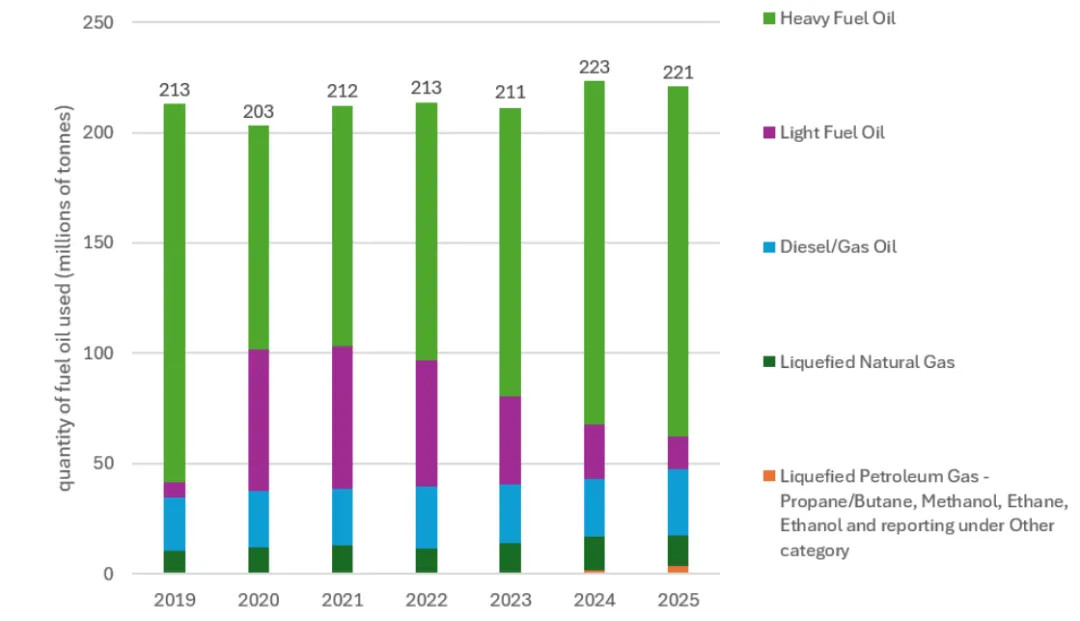
The report, submitted for consideration at the 85th session of the Marine Environment Protection Committee (MEPC 85), shows that 30,526 ships consumed approximately 220.8 million tonnes of fuel in 2025, down 1.2% from 223.4 million tonnes in 2024.
Despite the decline in fuel consumption, the number of reporting vessels increased by 2.8%, while their combined gross tonnage rose by 2.6%. The IMO suggested that longer voyages resulting from Red Sea disruptions and vessel diversions around the Cape of Good Hope may have contributed to fuel consumption remaining above earlier levels.
Total CO₂ emissions from the reporting fleet were estimated at approximately 682 million tonnes in 2025.
Conventional oil-based fuels continued to dominate, accounting for around 91.7% of reported consumption. Heavy fuel oil (HFO) remained the most widely used fuel at 158.6 million tonnes, representing 71.8% of the total. Diesel and marine gas oil consumption reached 29.89 million tonnes, while light fuel oil (LFO) accounted for 14.03 million tonnes.
Among alternative fuels, LNG consumption remained broadly unchanged at 14.96 million tonnes, representing 6.77% of total fuel use. Methanol consumption increased by 9.3% to approximately 151,000 tonnes, although its share of the overall marine fuel market remained small.
Biofuels recorded the strongest growth, with reported consumption surging 108.9% to 2.56 million tonnes, more than double the 1.23 million tonnes recorded in 2024. Biofuels accounted for approximately 1.2% of total reported fuel consumption.
However, the IMO noted that biofuel reporting remains inconsistent, as its fuel consumption database does not yet include a dedicated biofuel category. Fuels such as biodiesel and B24 or B30 blends are generally reported under "other fuels", making it difficult to determine their precise composition. The IMO Secretariat has therefore recommended introducing a separate biofuel reporting category.
By vessel type, container ships were the largest fuel consumers, burning approximately 63.9 million tonnes in 2025, followed by bulk carriers at 58.43 million tonnes and tankers at 41.38 million tonnes. Together, these three segments accounted for nearly three-quarters of reported fuel consumption.
The report also highlighted challenges in fleet carbon efficiency. A total of 6,399 vessels received a D or E rating under the Carbon Intensity Indicator (CII) system, representing approximately 22% of ships required to report, compared with 20.7% in 2024. However, differences in reporting coverage mean the figures do not necessarily indicate a deterioration in overall fleet performance.
Meanwhile, the IMO is preparing to introduce more detailed mandatory fuel consumption reporting from the 2026 reporting year. Ships will be required to provide additional information on fuel consumption by equipment type, fuel used while not underway, shore power usage and transport work.
The findings underline the challenges facing shipping's energy transition. While biofuel adoption is accelerating and alternative fuels are gradually gaining ground, conventional fuels still account for more than 90% of reported consumption. Reliable alternative fuel supplies, improvements in vessel efficiency and increasingly detailed operational data will remain essential as the industry moves towards its decarbonisation targets.

READ MORE
 Sustainability
UK & CHINA: NAVIGATING TOGETHER TOWARDS SAFER, GREENER SHIPPING
 Sustainability
India, EU launch coalition to develop green shipping corridor
 Sustainability
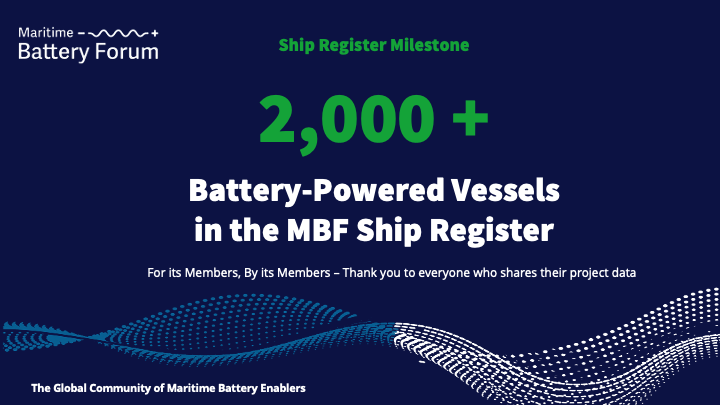
Global fleet of battery-equipped ships surpasses 2,000 vessels
 Sustainability
World's First Ammonia Dual-Fuel Bulker Delivered in China
 Sustainability
BIMCO adopts new contract addendum to ease investment in ship energy-saving retrofits
 Sustainability
Hapag-Lloyd Bunkers Goldwind Bio-Methanol in Busan
 Sustainability
CIMC Raffles’ Second Golar FLNG Project Advances With Donor Vessel Deal
 Sustainability
In this Chaos world,How Can Your Shipping Company Weather the Next Storm?
 Sustainability
Maersk Completes First U.S. Ethanol Bunkering for a Deep-Sea Containership
 Sustainability