


Erasmus Orders Two More Feeders in Fourth Huangpu Wenchong Deal in Six Months
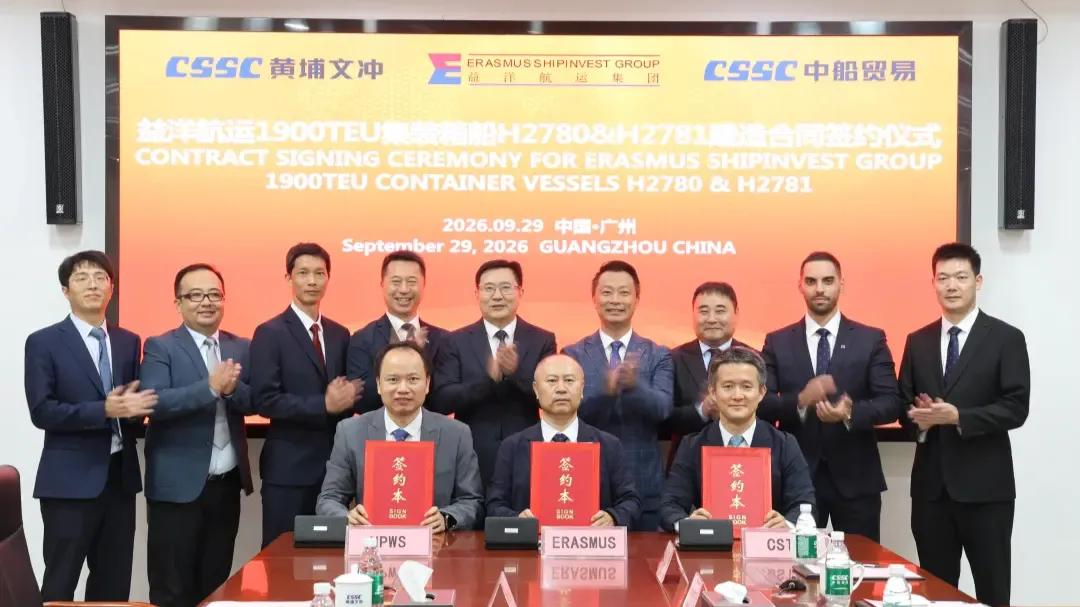
Greece-based Erasmus Shipinvest Group has ordered two more 1,900 TEU containerships at CSSC Huangpu Wenchong, marking its fourth deal with the Chinese shipbuilder in less than six months as it expands and diversifies its fleet.
The contract, signed on 29 September 2026 with Huangpu Wenchong and China Shipbuilding Trading Co., Ltd. (CSTC), brings the publicly disclosed firm orders under the two companies’ cooperation to eight vessels. It also takes the tally of firm newbuildings in Erasmus-related projects at three Chinese yards to 20, based on Xinde Marine’s earlier reporting.
The latest order links two longer-term strategies: Erasmus is broadening its shipbuilding supply base to support fleet growth, while Huangpu Wenchong is securing repeat business in feeder containerships alongside an expansion into larger designs.
Eight firm orders in less than six months
The two new vessels belong to Huangpu Wenchong’s Honghu series, developed in-house. Each will measure 172 metres in length and 27.5 metres in beam, with deadweight of approximately 24,000 tonnes. According to the shipyard, the design prioritises cargo intake, fuel efficiency and operational flexibility, meets IMO Energy Efficiency Design Index Phase 3 requirements, and incorporates shore-power connections and exhaust-gas cleaning systems.
The relationship began on 2 April, when Erasmus ordered two firm 1,800 TEU ships with options for two more. On 3 June, Erasmus and China United Lines signed for two firm 1,900 TEU vessels plus two options. A third agreement followed on 16 July, covering another two firm 1,900 TEU ships and two options.
Those three transactions accounted for six publicly reported firm vessels. The latest pair lifts that figure to eight, although the announcement does not specify whether the September ships represent the exercise of earlier options. The remaining option position, contract value and delivery schedule have not been disclosed.
The relationship also extends beyond newbuilding contracts. A comprehensive strategic cooperation agreement signed in June covers ship construction and repairs, providing a basis for cooperation throughout the vessels’ operating lives. For Erasmus, that could help coordinate maintenance as its fleet expands; for the yard, it offers scope to turn repeat orders into a broader service relationship.
Chinese yards take a larger role in fleet renewal
Huangpu Wenchong is one of three Chinese yards involved in Erasmus’ disclosed newbuilding programme. At Jiangsu New Hantong, an initial order for four 82,000 dwt Kamsarmax bulk carriers plus four options has become an eight-ship firm commitment. At Taizhou Sanfu, the group has ordered four firm 2,400 TEU containerships with options for two more.
Together with the eight firm vessels associated with the Huangpu Wenchong cooperation, these projects account for 20 confirmed newbuildings. That compares with the 18 firm ships identified by Xinde Marine in mid-July. The total tracks disclosed projects involving Erasmus, including the June agreement with China United Lines.
The growing Chinese commitment reflects both shipyard availability and changing assessments of construction capability. In an interview with Xinde Marine published in May, Erasmus chairman John Su said the group had historically relied mainly on Japanese yards, where increasingly limited building slots were pushing delivery dates further out.
Su also pointed to improvements in Chinese yards’ technology, productivity, facilities and project execution. He highlighted Wenchong’s established feeder designs, construction efficiency and overall cost competitiveness, while stressing that quality, reputation and delivery reliability remained central to yard selection.
Erasmus continues to take delivery of Japanese-built ships. Adding Chinese yards gives it access to a wider range of building slots and vessel designs, allowing procurement to support different parts of its business.
Expansion backed by customers and cash flow
The newbuilding programme supports Erasmus’ ambition to operate a fleet of more than 100 ships. At the time of the May interview, Su said the group controlled about 70 vessels and had more than 20 newbuildings scheduled for delivery through 2029. The 70-ship figure described the fleet under its control at that time, rather than a current count of wholly owned vessels.
Dry bulk remains a core business, with Ultramax, Panamax and Kamsarmax tonnage serving grain and agricultural commodity customers. Feeder containerships have become a faster-growing part of the portfolio through both secondhand acquisitions and newbuilding orders. Small LPG carriers and multipurpose ships add further business lines.
Su has linked growth to the ability to meet customer commitments and manage financing obligations through market cycles. Erasmus retains greater spot and short-term exposure on ships it has held for several years and that carry relatively little debt. For newer vessels and newbuildings, it generally favours longer charters that provide more predictable cash flow for debt service.
Recent deliveries illustrate that approach. The Kamsarmax ES Matsuyama entered a multiyear charter with Louis Dreyfus, while the 7,500 cu m LPG carrier Gas Joy began multiyear employment with a core energy customer after delivery.
No employment arrangements have been announced for the latest two feeders. The broader commercial approach nevertheless helps explain the group’s investment programme: fleet growth is being considered alongside customer demand, financing commitments and the capacity to manage additional ships.
Huangpu Wenchong broadens its containership range
For Huangpu Wenchong, Erasmus’ repeat business reinforces its established feeder franchise at a time when the yard is also expanding its presence in midsize and larger containerships.
The feeder orderbook has received several substantial additions this year. In February, Huangpu Wenchong signed for 16 ships of 3,000 TEU for Evergreen. On 24 September, it secured four 3,100 TEU Honghu-series vessels from Regional Container Lines, alongside naming ceremonies for three 4,488 TEU ships built for the Thai owner. One of those ships was delivered that afternoon.
At the larger end of the range, Wan Hai’s 6,000 TEU programme at the yard has expanded from six to ten vessels. Orders announced in June included three 5,300 TEU ships for Jiangsu Ocean Shipping, four 6,200 TEU vessels for Global Ship Lease and six 6,400 TEU ships for Peter Döhle, a combined 13 vessels.
These contracts build on the yard’s earlier development of 4,300 TEU series for customers including RCL and Arkas, while a 9,200 TEU project extends its product range further.
The scale of the wider business is reflected in the 2025 annual report of listed parent CSSC Offshore & Marine Engineering. The group reported orders for 53 newbuildings across ten vessel types, total business secured of approximately RMB23.46 billion, and a year-end shipbuilding backlog valued at about RMB59.1 billion. These are listed-group figures, rather than standalone Huangpu Wenchong results.
The order mix suggests a strategy of maintaining volume and customer relationships through established feeder products while building a larger presence in the midsize segment. Repeat contracts can help the yard accumulate design, procurement and construction experience, while a broader range gives existing customers more options as their fleet requirements change.
Erasmus’ latest pair of feeders fits that pattern. The owner is securing shipbuilding capacity for a more diversified fleet, and the yard is deepening a customer relationship built around a repeat design. The next test will be execution: timely deliveries, operating performance and the ability to support the ships throughout their working lives.

READ MORE
 Shipbuilding
COSCO SHIPPING Bulk Leads Order for 16 New 87,000-DWT Multipurpose Grain Carriers
 Shipbuilding
MISC Signs for Five More LNG Carriers at Hudong-Zhonghua
 Shipbuilding
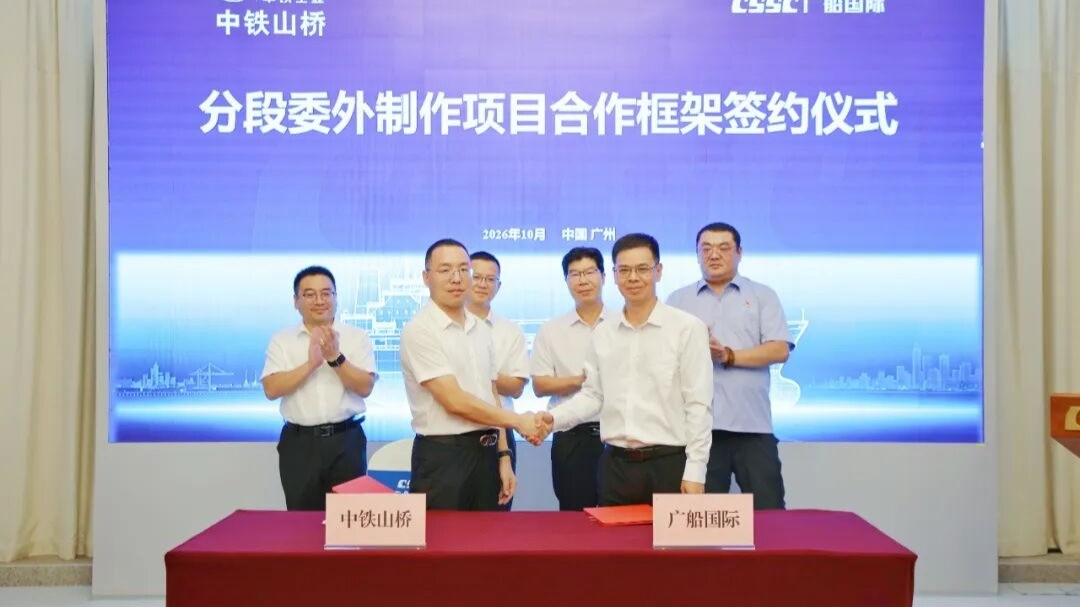
Another Chinese Bridge Builder Moves Into Shipbuilding
 Shipbuilding
Global Newbuilding Orderbook Matches 2008 Peak as Clarksons Flags Faster Fleet Growth
 Shipbuilding
Amid China’s Shipbuilding Boom, a State-Owned Yard Quietly Enters Liquidation
 Shipbuilding
Yichang Changyun plans RMB120m inland bulker programme
 Shipbuilding
Steel Giant Shagang Eyes Shipbuilding as a Booming Market Draws Industrial Capital
 Shipbuilding
Hengli Secures 12 Tanker Orders, Retaining World’s Largest VLCC Orderbook
 Shipbuilding
Hengli Signs 11 VLAC Contracts in One Week
 Shipbuilding