


RCL Adds Four Feeders to Its Huangpu Wenchong Programme


The 3,100-TEU order takes the Thai carrier’s cumulative contracts with the Chinese yard to 16 ships, spanning three vessel sizes. With the first ship from an earlier series now delivered, attention is turning from orders to fleet deployment.
Thailand’s Regional Container Lines (RCL) signed a contract on September 24 for four 3,100-TEU containerships at CSSC Huangpu Wenchong Shipbuilding in Guangzhou, China. The deal brings the partners’ cumulative programme to 16 vessels: eight 4,488-TEU ships, four 1,900-TEU ships and the four newly contracted feeders. RCL took delivery of the first vessel from the 4,488-TEU series on the same day.
The new ships belong to Huangpu Wenchong’s Honghu design series. Industry reports put their length at 199.99 metres and beam at 35.2 metres, and describe a design with substantial laden-container and refrigerated-container capacity. RCL has not publicly disclosed the price, delivery schedule, propulsion specification or any follow-on options for the four ships.
Huangpu Wenchong is part of China State Shipbuilding Corporation, the state-owned group that controls a large network of shipyards and marine equipment businesses. For RCL, which specialises in regional liner and feeder services, the agreement adds another vessel size to an expanding relationship with the Guangzhou yard.
Earlier orders begin entering service
The companies began working together on the 4,488-TEU series in 2024, later expanding that project to eight ships. A four-ship, 1,900-TEU order followed in August 2026. The latest contract takes their cumulative contracted total to 16; it should not be read as a current count of ships under construction, because the first 4,488-TEU vessel has already been delivered.
RCL confirmed that ANITTA BHUM was delivered on September 24 and is due to join its Far East–Latin America service. Two sister ships were named at Huangpu Wenchong that day: BENYAPAR BHUM is scheduled for delivery on October 19 and deployment on an Asia–India Subcontinent service, while CHANTISA BHUM is due on November 20 for a South China–Indonesia service. RCL has not announced routes for the newly ordered 3,100-TEU vessels.
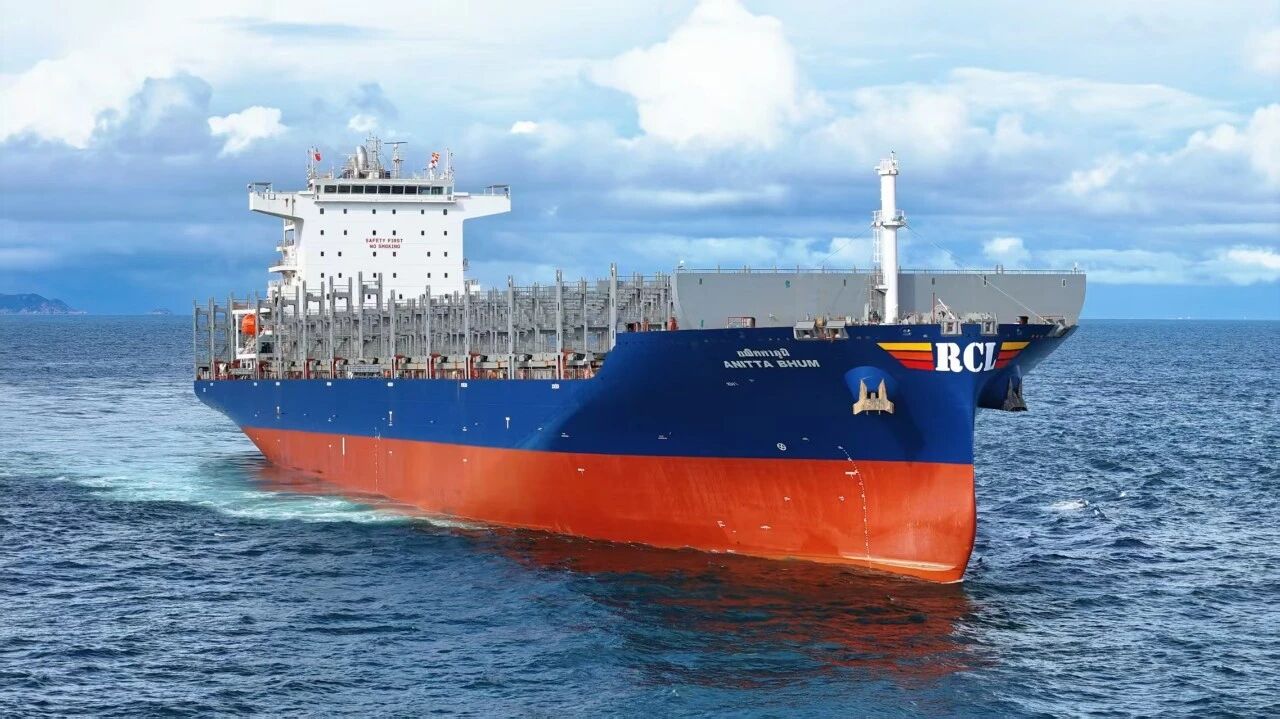
ANITTA BHUM
The three sizes offer different deployment possibilities. Smaller feeders can serve lower-volume regional routes, while the 4,488-TEU ships provide more capacity for larger services. The 3,100-TEU design sits between them. How much of RCL’s incoming capacity will replace older ships, and how much will support network expansion, remains to be seen.
Comparable prices, but no RCL contract value
Two disclosed deals at the same yard give a sense of 2026 pricing for similarly sized ships, although neither establishes the value of RCL’s contract.
In a January 27 filing, Evergreen Marine’s Singapore subsidiary reported board approval for 16 3,100-TEU ships from Huangpu Wenchong at $46 million–$56 million per vessel, or $736 million–$896 million in total. COSCO SHIPPING Holdings disclosed a separate August 28 contract for six 3,200-TEU wide-beam ships at the yard at RMB 339.8 million per vessel. Design, equipment, delivery slots and contract terms can all affect the price. Applying either figure to RCL’s four ships would turn a comparable transaction into an unsupported estimate of this deal.
Fleet investment meets supply pressure
RCL’s latest reported results show why fleet flexibility matters. Its average freight rate rose from $406 per TEU in the first quarter of 2026 to $552 per TEU in the second, but second-quarter cargo liftings fell. For the first half, net profit declined 10.1% year on year to THB 3.65 billion. RCL cited disrupted Middle East services, higher operating costs and delayed customer shipments among the pressures on its business. Those results describe a reporting period; they do not establish the expected return on the new order.
The broader container market also faces growing vessel supply. BIMCO’s September outlook describes mounting supply pressure, a reminder that ships ordered in one market may enter service under very different freight conditions. For RCL, the commercial test will be whether the new vessels improve fleet efficiency and match demand across its network as they arrive. The delivery dates and final specifications of the four 3,100-TEU ships will be important to that assessment.

READ MORE
 Shipbuilding
Breaking! Hengli Announces Deals for 52 Ultra-Large LNG Dual-Fuel Containerships
 Shipbuilding
Global Newbuilding Orderbook Matches 2008 Peak as Clarksons Flags Faster Fleet Growth
 Shipbuilding
COSCO SHIPPING Bulk Leads Order for 16 New 87,000-DWT Multipurpose Grain Carriers
 Shipbuilding
A New State-Owned Shipbuilding Group Is Born in China
 Shipbuilding
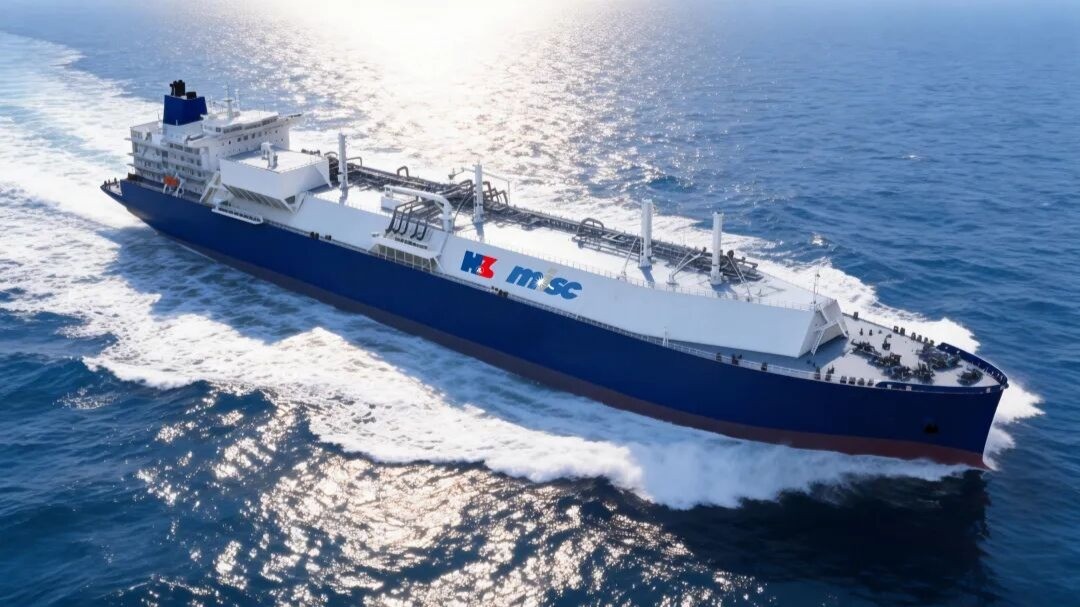
MISC Signs for Five More LNG Carriers at Hudong-Zhonghua
 Shipbuilding
Another Chinese Bridge Builder Moves Into Shipbuilding
 Shipbuilding
Amid China’s Shipbuilding Boom, a State-Owned Yard Quietly Enters Liquidation
 Shipbuilding
Yichang Changyun plans RMB120m inland bulker programme
 Shipbuilding
Steel Giant Shagang Eyes Shipbuilding as a Booming Market Draws Industrial Capital
 Shipbuilding