


Shipping’s AI Future Will Still Depend on People, Says Dr.Martin Stopford


From urging shipowners to invest in digitalisation first, to arguing that fleets should be managed like “transport factories”, Martin Stopford has spent the past few years building a consistent argument about where shipping’s next productivity gains will come from. His latest message adds another layer: AI will matter, but the real competitive advantage will come from people who understand shipping well enough to use it.
Artificial intelligence is moving rapidly into shipping.
Voyage optimisation, vessel performance management, predictive maintenance, chartering, market analysis, document processing and port operations are all attracting growing investment. Tasks that once depended heavily on manual work are increasingly being supported by algorithms, while more complex operational and commercial decisions are beginning to incorporate AI-generated analysis.
But Dr Martin Stopford, one of the world’s most influential maritime economists and the author of Maritime Economics, has brought the discussion back to a more fundamental question:
Who will actually use these technologies effectively?
In an interview published by the Maritime and Port Authority of Singapore (MPA) on 12 August, under the title “Not Just AI: Why People Will Shape Shipping’s Future”, Stopford argued that AI will not remove the complexity of running a shipping business.(https://www.linkedin.com/pulse/just-ai-why-people-shape-shippings-future-mpasingapore-bq0oc/)
Shipping is filled with thousands of small, highly specific and context-dependent problems every day. AI can process data, identify patterns and generate recommendations, but turning those capabilities into operational value still requires people who understand the business, can frame the right problems, interpret the results and make decisions.
For readers who have followed Stopford’s recent appearances at Xinde Marine Forum London, as well as his interviews with Xinde Marine News, this is not a sudden shift in thinking.
Over the past several years, his arguments around digitalisation, logistics integration, fleet management, seafarers and technology have increasingly converged on one central issue:
Where will the next major productivity gains in shipping come from?
AI is becoming the latest piece of that broader picture.
After bigger ships, where does the next productivity gain come from?
Stopford’s perspective is shaped by the unusually long time horizon through which he studies shipping.
Having analysed maritime economics for more than half a century, he tends to view today’s containerships, VLCCs, bulk carriers and LNG carriers as part of a much longer evolution in global transport. Trade growth, capital cycles, technology, vessel size and corporate organisation have all contributed to improvements in shipping productivity over time.
For several decades, one of the most powerful drivers was vessel scale.
Larger containerships, ore carriers and tankers allowed more cargo to be moved on each voyage and helped reduce unit transport costs. During periods of rapid global trade growth, vessel upsizing and specialisation played a major role in improving the efficiency of deep-sea shipping.
That route to productivity, however, is becoming more constrained.
At the 2025 Xinde Marine Forum London, Stopford argued that shipping companies would increasingly need to move beyond managing vessels largely as individual assets and instead manage fleets as part of an integrated transport system.
The next phase of productivity improvement, in his view, will depend more heavily on logistics integration, information connectivity and optimisation across the transport chain.
He described this with a striking analogy:
Shipping companies should learn to operate fleets more like factories.
A factory does not manage each machine as an isolated unit. Raw materials, production equipment, inventory, orders and delivery schedules are interconnected. Stopford believes shipping will increasingly move in the same direction, with vessels, cargoes, shore-based operations, ports and customer information connected within a single operating system.
The objective then changes. The company is no longer trying only to optimise an individual ship. It is trying to optimise the entire transport process.
That argument provides an important starting point for understanding his latest comments on AI.
Buying AI does not automatically make a shipping company intelligent. AI needs to operate within a business that can be described by reliable data, connected across functions and continuously optimised.
If vessels, cargo systems, ports, commercial departments and technical management remain trapped in separate information silos, even the most advanced algorithms will only be able to optimise fragments of the business.
“If I were a shipowner, I would invest in digitalisation first”
In March 2026, Xinde Marine News published an interview conducted with Stopford around the 2025 Xinde Marine Forum London.
Asked where he would prioritise investment if he were running a shipping company today, his answer was straightforward:
He would invest in digitalisation first.
The reasoning was equally important.
A genuinely mature digital capability cannot be created simply by buying a software platform. A company first needs to understand what data it has, where that data comes from, whether it is reliable, and whether different systems can communicate with one another.
It then needs to redesign workflows, decision-making processes and the way information moves between ship and shore.
Stopford suggested that building this capability could take as long as a decade.
Digitalisation, in other words, is not an IT procurement exercise. It is a long-term change in how a shipping company operates.
That observation looks even more relevant today as generative AI moves deeper into business.
For years, companies discussing digitalisation often focused on fleet management software, electronic documentation, data platforms and automation. The rapid development of AI has made one thing increasingly obvious: the quality of AI output depends heavily on the quality of the underlying data and processes.
The more complete a company’s data is, the clearer its workflows are, and the more effectively different departments share information, the easier it becomes to deploy AI across real operations.
The reverse is equally true.
A shipping company can buy access to the most sophisticated AI tools available, but if its core data remains fragmented, inconsistent and disconnected between ship and shore, many applications will remain localised or superficial.
This helps explain why Stopford was pushing shipping companies to build digital capabilities before AI became the dominant technology discussion.
His focus has consistently been productivity, and digital infrastructure is becoming one of the foundations for the next wave of productivity improvement.
Before AI, shipping still has a data problem
At Singapore Maritime Week in April 2026, Stopford pushed the argument further.
Xinde Marine News subsequently reported on his warning that shipping’s traditional “supercycle highway” was coming to an end.
For much of modern shipping history, the industry could be understood through a relatively familiar framework. Global trade growth generated additional demand for seaborne transport, shipowners responded with new investment, and the interaction between vessel supply and cargo demand produced the familiar shipping cycle.
Today, the number of variables influencing the industry has expanded dramatically.
Trade realignment, decarbonisation, digitalisation, geopolitics and supply-chain restructuring are developing simultaneously. Shipping companies are now processing a far broader range of information than traditional freight rates, fleet supply and cargo demand alone.
At the same time, enormous volumes of new data are being generated.
A modern vessel continuously produces information on engines, fuel consumption, speed, weather and equipment condition. A major container terminal generates vast amounts of data on container position, weight, handling, yard operations and equipment movements. Across the wider logistics chain sit bills of lading, manifests, sailing schedules, customer information, cargo flows and commercial data.
The problem is not that shipping lacks information.
The problem is that much of that information remains distributed across different companies, devices, ports and legacy systems.
Connecting those datasets — and turning them into better operational and commercial decisions — is one of the central challenges of digitalisation.
Stopford returned to the same theme in the latest MPA interview.
Using container shipping as an example, he noted that ports already hold substantial operational information, including container weights, stowage positions, cargo manifests and equipment movements. Much of it remains underused.
For a global maritime hub such as Singapore, the opportunity lies in connecting more of that information and using it to improve commercial and operational decision-making.
That suggests an important conclusion for shipping’s AI race.
Competition in AI may begin as competition in data capability.
A company first needs to see the transport network clearly before AI can help it determine how that network should be improved.
From “transport factories” to “floating transport factories”
In his latest interview with MPA, Stopford introduced another striking expression:
“Floating transport factories.”
The phrase closely echoes his earlier argument at Xinde Marine Forum London that fleets should be operated more like factories.
Historically, one of the defining characteristics of shipping companies has been the separation between ship and shore.
Seafarers operated thousands of miles from headquarters and concentrated on navigation, machinery, maintenance and vessel safety. Shore-based teams handled chartering, commercial operations, procurement, technical management, insurance and corporate functions.
Communications technology naturally reinforced that separation.
High-speed satellite connectivity is now changing the structure.
Vessels can continuously send operational and machinery data ashore. Shore teams can monitor position, speed, fuel consumption and equipment condition in near real time, while weather, routing, technical and commercial information can be transmitted back to the vessel.
For Stopford, the next stage is not simply more communication.
It is a change in how the organisation itself works.
Ships will increasingly become mobile nodes within a shipping company’s broader operational and information network.
Commercial teams, technical departments, data specialists and seafarers can work from the same information base, while the practical experience of crews can feed much more rapidly into shore-based management and innovation.
The traditional linear model — shore gives instructions, vessel executes — begins to evolve into a network in which information and expertise circulate continuously in both directions.
That is what makes the idea of a “floating transport factory” significant.
The future intelligent ship will not be defined simply by how many sensors, autonomous functions or software systems are installed onboard.
The larger transformation lies in the relationship between the vessel and the company around it.
When dozens or hundreds of vessels are connected within the same operating system, combining ship condition, cargo, weather, port and commercial information, a shipping company begins to move from managing ships to managing a transport network.
AI can then search for optimisation opportunities across that network rather than within isolated assets.
Seafarers may become more integrated, not less relevant
This leads directly to another important part of Stopford’s latest argument: the future role of seafarers.
Discussions about smart shipping and AI often move quickly towards two questions: how many seafarers will be needed in the future, and when autonomous ships will arrive.
Stopford is looking in another direction.
As digital connectivity improves, he sees greater scope for seafarers to participate directly in innovation, technical improvement and operational optimisation. Training, in his view, should therefore not focus only on young graduates entering the industry.
It should extend across the organisation, including to people spending much of their careers at sea.
This is consistent with the argument he made in his earlier interview with Xinde Marine News.
Future maritime professionals will need a broader combination of skills. Traditional expertise in navigation, engineering, vessel management and commercial shipping will remain fundamental, but digital systems will change the way that expertise is applied.
For seafarers, this could mean a gradual reshaping of the job rather than the simple disappearance of the role.
Navigation and engineering competence remain essential to safe vessel operation, while data interpretation, energy-efficiency management, automation, remote diagnostics and ship-shore collaboration are likely to become increasingly important.
Shore-based jobs will also change.
Chartering professionals may need greater familiarity with analytics. Technical departments will increasingly work with emissions and performance data. Operations teams may make routing and scheduling decisions alongside algorithms. IT specialists will need a much deeper understanding of ships and shipping operations.
That is the real significance of Stopford’s emphasis on people who “understand the business”.
The most valuable people in tomorrow’s shipping companies may not be pure software engineers, nor professionals who continue to work entirely within traditional maritime disciplines.
The scarce talent may be people who can stand between both worlds — people who understand shipping and can also work effectively with data, digital systems and AI.
Why Stopford remains cautious about the technology of the moment
There is another consistent theme running through Stopford’s comments on green shipping, digitalisation and AI.
He has remained cautious about fashionable technologies.
In 2024, Xinde Marine News reported on his deliberately provocative comment that he did not “like green fuel very much”. His point was not opposition to decarbonisation. He was highlighting the unresolved uncertainties surrounding fuel cost, availability, infrastructure and technological maturity, while arguing that nuclear power, carbon capture and other pathways should remain part of the discussion.
He is applying much the same analytical discipline to AI.
Stopford has not presented any particular AI model as the solution for shipping, nor has he predicted that a single software platform will transform the industry overnight.
His first questions are more fundamental.
Does the company have good data?
Are its operational processes properly structured?
Can ship and shore actually share information?
Does it have people capable of understanding the business problems AI is being asked to solve?
That caution reflects the economics of shipping itself.
Large commercial vessels remain in service for decades. Fleet, propulsion and technology decisions can shape balance sheets for many years. Poor choices around fuel systems, digital architecture or workforce structure can therefore impose long-term costs.
The logic running through Stopford’s recent thinking is one of capability building:
Build an organisation that can cope with technological change, then decide which technologies to deploy.
Seen this way, “invest in digitalisation first” and his latest emphasis on people are entirely consistent.
The first concerns the operating infrastructure of the future shipping company.
The second concerns who will make that infrastructure productive.
AI is changing what it means to “understand shipping”
Stopford is currently working on the fourth edition of Maritime Economics.
According to MPA, revisiting the book has led him to rethink some of its most fundamental chapters because maritime transport can no longer be understood in isolation from the wider supply chain.
Ships, ports, logistics companies and cargo owners are becoming more closely interconnected. Decisions made in one part of the system increasingly influence another, while the competitiveness of shipping companies is becoming more closely linked to their ability to understand the entire logistics chain.
That may be one of the most important threads running through Stopford’s recent work.
For generations, Maritime Economics helped shipping professionals understand trade, freight rates, fleet supply, costs and shipping cycles.
Those forces have not disappeared.
But shipping is increasingly embedded in a global logistics system connected by data.
Understanding the ship alone is no longer enough. Professionals also need to understand where that vessel sits within the supply chain.
Understanding freight markets alone is no longer enough. Cargo flows, port productivity, energy costs, regulation and geopolitics increasingly interact with commercial decisions.
Operational expertise remains essential, but professionals will also need to know how to use real-time data and AI to improve judgement.
AI may make many tasks faster. Some repetitive roles will almost certainly be redesigned.
At the same time, it may increase the value of professional judgement.
As information becomes easier to obtain and analytical tools become more widely available, competitive advantage may move from simply possessing information towards knowing which questions to ask, which answers to trust and what action to take.
Seen together, Stopford’s arguments over the past few years form a coherent progression.
The productivity gains delivered by ever-larger ships are becoming harder to extend. Shipping will increasingly need to search for efficiency across the wider logistics system. That requires digitalisation and connected data. AI can then unlock more value from that data.
And at the centre of the system will still be people.
People who understand vessels, cargoes, markets and operations.
People who understand data.
And increasingly, people who know how to bring both together.
Shipping now has access to more powerful technological tools than ever before.
The next competitive advantage may depend on which companies can connect ships, shore teams, data and people first.
Martin Stopford’s latest message to the industry can therefore be reduced to one simple conclusion:
AI will become more powerful. But in the future of shipping, one of the scarcest resources may still be people who truly understand the business — and know how to use AI to make it better.

READ MORE
 Technology
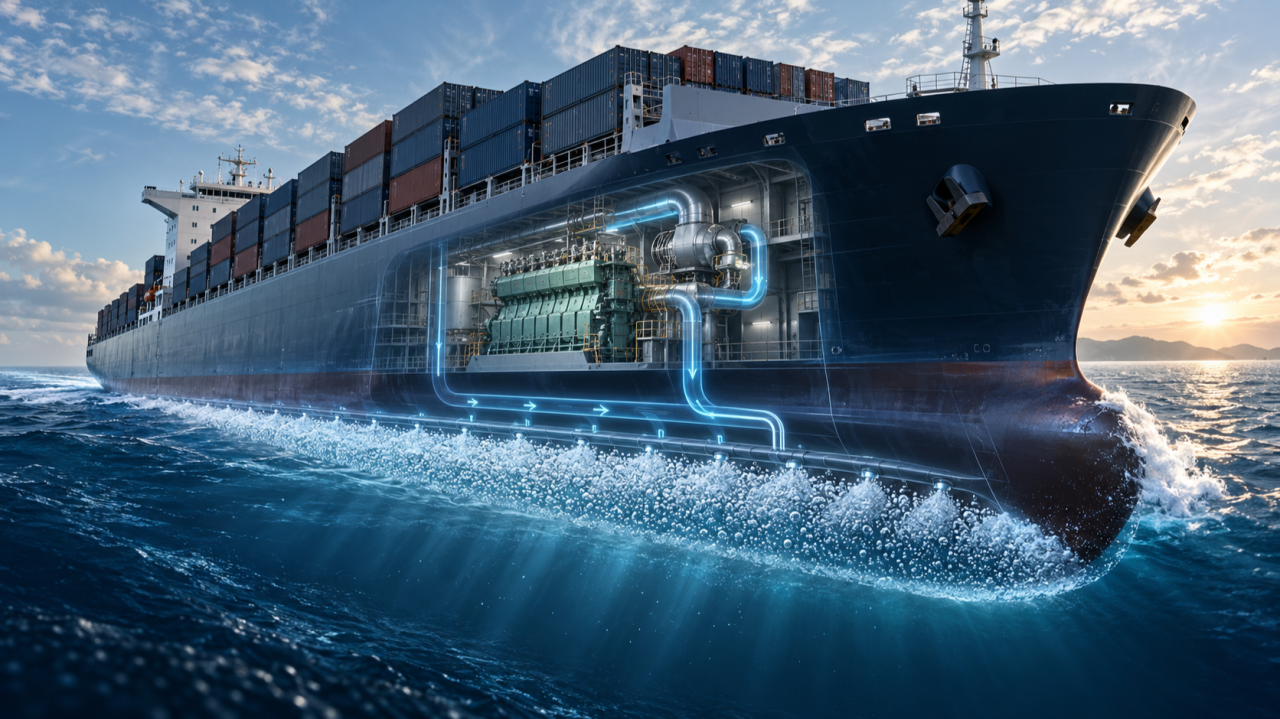
Up to 6% Net Efficiency Gain: Everllence and Silverstream Integrate Air Lubrication with the Main Engine
 Technology
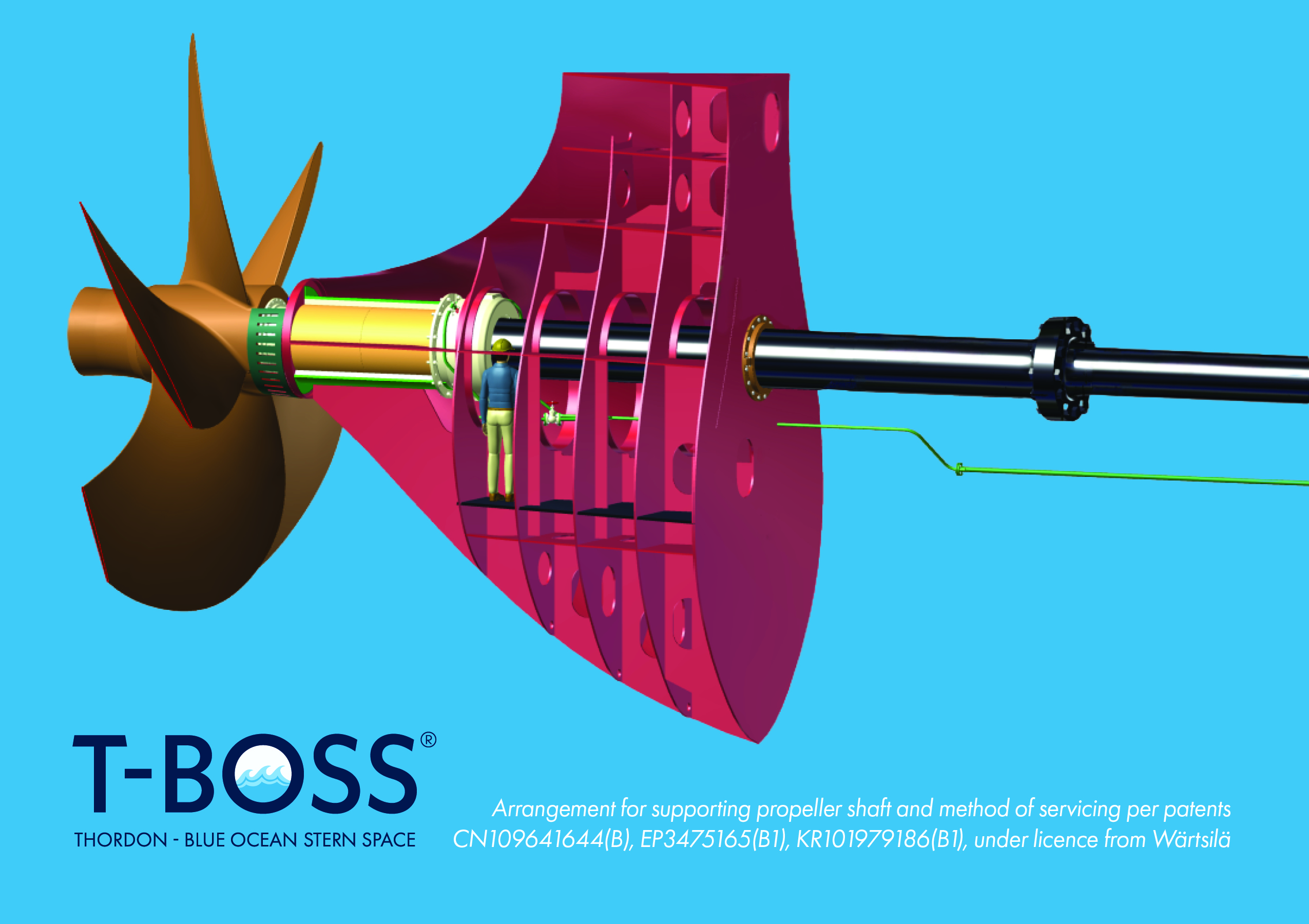
IN-DEPTH SUEZMAX STUDY MAKES CAPEX CASE FOR T-BOSS® STERNTUBELESS SHAFTLINE SYSTEM
 Technology
CMR KOREA: Empowering Maritime Safety & Efficiency with Advanced Communication & Monitoring Solutions
 Technology
Shiptec China 2026.10.28-10.30 | WE Tech Solutions- Energy Solutions Leading Marine Electrification
 Technology
Shiptec China 2026.10.28-10.30 | HYDWIN- From Standalone Breakthroughs to Full-Process Chain Technology: China's Green Shipbreaking Is Moving Toward a Systematized Intelligent Era.
 Technology
AI Alone Won't Change Behaviour. The Triple AI Will.
 Technology
Shiptec China 2026.10.28-10.30 | The Green and Intelligent Ship Water - pump Solution of Beijing Tanxianda Pump Technology Development Co., Ltd.
 Technology
Amazon Leo Moves Into Shipping, Opening a New Front in Maritime Satellite Connectivity
 Technology
GTT Marine Lands Flagship Digitalisation Project for PETRONAS’ Chartered LNG Fleet
 Technology