
How Far Has AI Advanced in China’s Port and Shipping Sector?
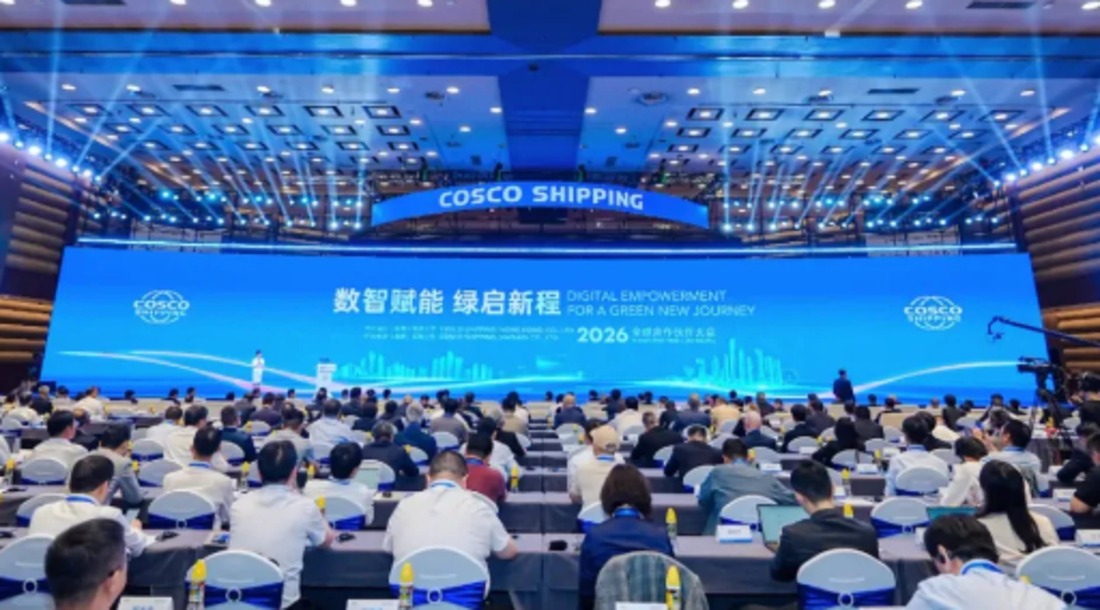

Xinde Marine News — Artificial intelligence is no longer a distant concept for China’s port and shipping sector. It is already being tested, deployed and scaled across vessel inspection, ship design, port operations, navigation services, fleet management, bunker supply, cybersecurity and maritime education.
That was the clearest message from the “Maritime Digital Intelligence — AI Empowering Shipping” seminar held in Boao, Hainan on 26 June, as part of the 2026 Global Partners Conference hosted by COSCO SHIPPING (Hong Kong) Co., Limited and COSCO SHIPPING (Hainan) Co., Ltd.
Organised by COSCO SHIPPING Technology, the seminar brought together representatives from maritime regulators, classification societies, ship designers, ports, shipowners, bunker suppliers, cybersecurity companies, universities and maritime technology platforms. The discussions went far beyond broad statements about digitalisation. They offered a detailed snapshot of how AI is actually being applied in China’s maritime sector today.
The conclusion is clear: China’s port and shipping industry has moved beyond the stage of basic digital systems and data dashboards. In several key areas, AI is already embedded in real operational workflows. Some applications are mature enough to generate measurable gains in efficiency, safety and energy performance. Others are still in the pilot or early deployment stage. A number of bottlenecks remain, including shipboard connectivity, data reliability, system integration, liability boundaries and international rules.
In practical terms, AI has started working in shipping. It has not taken over shipping. Its current role is to assist decision-making, identify risks earlier, optimise processes and capture expert knowledge in a form that can be reused.
From Digitalisation to AI-Enabled Workflows
For years, digitalisation in shipping often meant moving business processes online, building dashboards, visualising vessel positions, digitising documents and improving approval workflows. That phase remains important, but the industry’s focus is shifting.
Shipping companies are now asking more direct questions: Can AI be embedded into daily workflows? Can fragmented expert experience be turned into reusable knowledge? Can massive operational datasets be converted into risk warnings and business decisions? Can AI reduce repetitive work for crew, planners, surveyors, designers and managers?
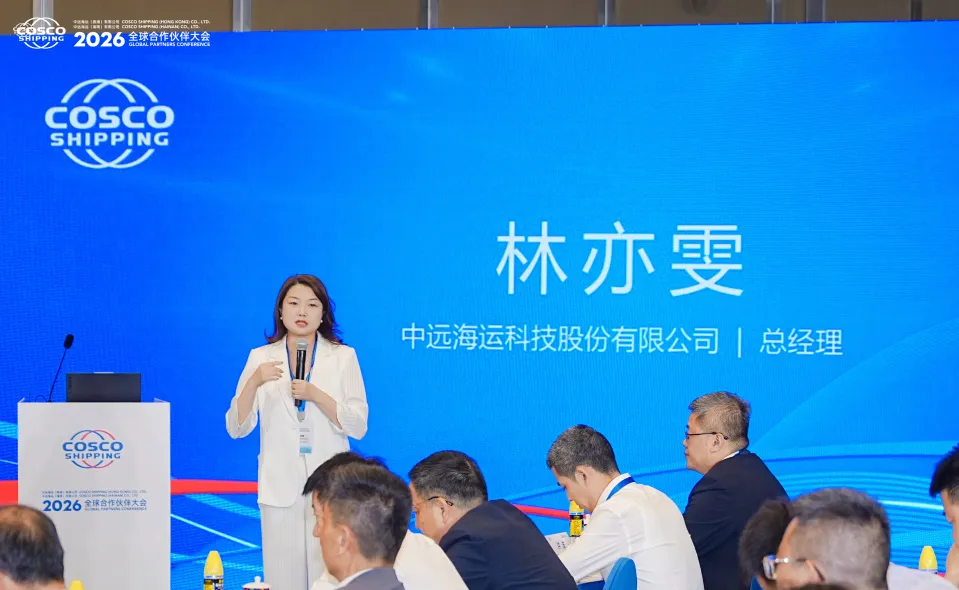
Lin Yiwen, General Manager and Deputy Party Secretary of COSCO SHIPPING Technology, said the maritime sector needs to move from “using AI as a tool” to building operations “with AI at the core”. She said COSCO SHIPPING Technology aims to open up digital infrastructure based on industry models, big data and intelligent platforms, and work with partners to build an end-to-end intelligent port and shipping ecosystem.
Yang Wei, Deputy General Manager of COSCO SHIPPING Technology, described AI’s industrial value as something that runs through the full business chain. In his view, AI is pushing the maritime industry through four major shifts: from information processing to knowledge accumulation, from experience-based decisions to AI-assisted decisions, from single-point automation to full-process intelligence, and from reliance on individual experts to human-machine collaboration.
That view was echoed throughout the seminar. Whether the subject was AI-assisted vessel inspection, ship performance optimisation, port scheduling, container ship safety, dry bulk chartering or bunker operations, the underlying challenge was similar: how to convert human experience, scattered data and fragmented systems into digital capabilities that can be recognised by models, invoked by workflows and improved over time.
Classification: AI Is Entering Review, Survey and Risk Warning
Vessel inspection is one of the most safety-critical parts of the shipping industry. China Classification Society (CCS) has already started applying AI to ship survey and technical services.
Hong Bo, Deputy Director and Chief Technology Officer of CCS International Business Operation Center, said vessel inspection has traditionally relied heavily on surveyor experience and involved significant labour intensity. AI can help release surveyors from repetitive work and allow them to focus on higher-value technical judgment.
CCS has explored AI-assisted plan approval, intelligent non-destructive testing analysis, vessel fire prediction and hydrodynamic performance prediction. It has also developed an intelligent risk-warning agent for ocean-going ships, based on large models and knowledge graphs.
More importantly, CCS is moving from single-point tools towards system-level capability. It is leading the construction of high-quality maritime datasets and preparing guidance for standardised data collection and management for ships and offshore facilities.
Looking ahead, CCS sees four major AI-enabled directions: intelligent inspection, AI-assisted ship research, AI-enabled industry services and full lifecycle ship management. This suggests that AI in classification will increasingly extend into rules research, plan approval, construction survey, operational monitoring, customer service and risk governance.
For the international industry, the significance is clear. Classification societies may become not only technical assurance providers, but also key players in maritime data standards, AI governance and safety rules.
Ship Design: AI Is Starting to Feed Operational Data Back Into Design
Ship design is another area where AI is beginning to reshape traditional practices.
Li Xin, Vice President of Shanghai Merchant Ship Design & Research Institute (SDARI), introduced the institute’s DOSS digital operation platform, which is being used to support ship safety, energy efficiency and lifecycle performance.
AI applications in ship design and operation are currently concentrated in several areas: speed optimisation, trim optimisation, route optimisation, equipment health management, CII rating improvement and boil-off gas management for LNG carriers.
For speed optimisation, AI can analyse large volumes of voyage data and help vessels reduce fuel consumption while still meeting arrival requirements. While this was previously more common for vessels on fixed routes, it is now being applied to bulk carriers and container ships with more variable trading patterns.
For trim optimisation, AI can combine cargo loading, voyage schedules, vessel condition and loading computer data to recommend more efficient trim settings. Container ships, with their frequent changes in loading, schedule and route, offer significant optimisation potential.
For route optimisation, AI can combine weather, sea conditions, vessel location and port schedules to simulate multiple voyage plans. In one case shared at the seminar, a route optimisation plan increased sailing distance by 64 nautical miles but improved overall energy performance by 8.3%. This shows that AI does not simply choose the shortest route; it seeks a better balance between time, fuel consumption, comfort and safety.
Equipment health management is also developing. By modelling external parameters such as exhaust temperature, scavenge air pressure and exhaust back pressure, platforms can detect abnormal engine conditions. Predictive maintenance remains more challenging because shipboard data collection is still incomplete and engine types vary widely.
AI is not yet capable of independently completing full ship design drawings. Ship design still involves complex calculation, iteration and engineering judgment. But AI has already begun to influence original ship design through feedback from real operating data. Future ship designs will increasingly reflect actual operating conditions, rather than relying only on rules and design-stage assumptions.
Ports: China’s Most Mature AI Application Field
Among all maritime segments, ports are currently one of the most advanced areas for AI deployment in China.
The reasons are straightforward. Port environments are relatively fixed, equipment is concentrated, data collection is easier, and workflows are more standardised. These conditions make ports well suited for AI applications.
Shandong Port Technology Group said Qingdao Port has been approved as a national AI application pilot base. The group has mapped 60 port digitalisation scenarios across eight major categories. Three applications have already shown notable results: intelligent terminal scheduling, full-process safety management and AI knowledge management.
In intelligent scheduling, AI models are used to optimise terminal operations under multiple constraints, including safety, efficiency and energy consumption. In trials across several terminals in Shandong, overall terminal operating efficiency improved by 10.4%, while total energy consumption fell by 6%.
In safety management, the “Zhisun” system breaks down high-risk operations such as working at height, lifting, hot work and confined-space operations into standardised process steps. Workers upload photos at each step, and AI checks qualifications, protective equipment, safety personnel, locks and site conditions before the next step is allowed. The system processes more than 6,000 work orders per day.
Guangzhou Port also shared its AI applications. For bulk and liquid cargo terminals, AI is mainly used to support equipment control across automated belt conveyors, pipelines and silos. For container terminals, AI is already being applied to smart tallying, gate recognition, automated operations and customer service.
Guangzhou Port Data Technology Co., Ltd. said the next focus is intelligent dispatching, central control and yard planning. AI can integrate data on vessel arrivals, berths, channels and tugboats to generate operating plans and adjust them automatically when delays or equipment failures occur. Yard planning can use historical voyage and gate-in data to forecast container volumes and generate operating plans for large terminals with more than 100,000 containers in the yard.
China’s port sector has therefore moved from asking whether AI can be used to asking how much AI can improve efficiency, reduce energy use, lower labour intensity and strengthen safety.
Navigation Services: Towards “One Ship, One Plan, Full-Voyage Support”
Navigation services are also becoming more intelligent.
The South China Sea Navigation Service Center under the Ministry of Transport is building a “1+N” intelligent navigation service system based on the S-100 framework. The system integrates data from aids to navigation, hydrographic surveying, communications, AIS, multi-functional navigation marks and hydro-meteorological sources.
The system supports intelligent route recommendation and navigational risk warnings. Route recommendations are generated by considering water depth, traffic flows, close-quarters situations and other operational factors.
According to the presentation, about 11,000 vessels have already connected to S-124/S-127-related services. Digital service usage has exceeded 10 million online hours, with more than 6.1 billion service calls.
The next step is to build a broader maritime sensing network, integrating multi-functional navigation marks, hydrographic and meteorological data, AIS, radar, CCTV and low-orbit satellite data. The goal is to support personalised services such as high-precision water depth information, current data, sea state information, route optimisation and tidal window calculations.
This points to a future in which navigation services move from static information release to dynamic sensing, intelligent calculation and full-voyage support.
Fleet Operations: AI Is First Landing in Stowage, Emails, Risk Warning and Scheduling
Fleet operations are among the most complex areas for AI deployment. Container ships, bulk carriers, tankers and specialised vessels have different operating models, data structures, crew practices and commercial workflows.
COSCO SHIPPING Bulk said its AI strategy is to free crew and dispatchers from repetitive work and move from experience-based decisions to data-driven decisions. In 2024, the company launched its “Boyi AI” digital brand and identified more than 40 high-value business scenarios, with more than 20 functions already embedded in business systems.
One example is intelligent stowage. Traditional manual stowage can take six to seven hours. AI can reduce the process to about 35 minutes while improving loading rates and safety indicators.
Another example is intelligent email scanning. Dry bulk chartering still relies heavily on email communication. AI can automatically analyse thousands of chartering emails and match them with vessel resources, significantly improving decision-making efficiency.
Future development will focus on proactive information push and multi-agent collaboration. Instead of waiting for people to search for information, AI systems can push market signals, weather risks, port congestion warnings and business opportunities to relevant teams. Dedicated agents for chartering, scheduling, safety and finance could work together to generate globally optimised operating plans.
Container ship safety presents a different challenge. A senior representative from Shanghai Ocean Shipping Co., Ltd. noted that container vessels are among the more accident-prone vessel types. A single large container ship may carry thousands of boxes, including dangerous goods, lithium batteries and reefer cargoes. Ships sail through typhoons, congested waters and complex routes, while shore and vessel teams often operate with information time lags.
AI cannot yet replace captains or crew judgment. Much expert knowledge from senior masters, casualty investigations and operational procedures has not yet been fully digitised. The realistic role of AI in fleet safety is therefore to provide decision support, show the basis for its warnings and gradually build trust through accurate risk alerts.
This may be the most important point for shipowners: AI in fleet operations will mature first as an assistant, then as part of human-machine collaboration, and only later as a more autonomous operating capability.
Bunkering: AI Is Entering Procurement, Carbon Calculation and Storage Dispatch
Fuel remains one of the largest cost items for shipowners. China Marine Bunker (PetroChina) Co., Ltd. (CHIMBUSCO) said reducing fuel costs depends on two core areas: procurement and supply security, and digital intelligent operations.
On the procurement side, CHIMBUSCO relies on its shareholders COSCO SHIPPING and PetroChina, while also expanding international procurement channels. Its global bunker supply volume reached 32.8 million tonnes last year.
On the digital side, CHIMBUSCO is transforming from a single fuel supplier into a low-carbon intelligent service provider. It has launched tools such as a carbon intensity calculator, an EU low-carbon fuel blending calculator, an industry model-based intelligent agent with COSCO SHIPPING Technology, and a green fuel information service platform.
The company is also developing a smart operation platform covering enquiries, orders and delivery, as well as an intelligent storage and dispatching platform to optimise fuel inventory and bunker vessel deployment.
As shipping regulations such as EU ETS and FuelEU Maritime continue to reshape operating costs, bunker suppliers are likely to become more deeply involved in shipowners’ carbon management and compliance systems.
Cybersecurity: The Foundation of Maritime AI
The deeper maritime digitalisation goes, the larger the cyber risk surface becomes.
QAX (Qi An Xin Technology Group Inc.) warned that AI is changing cyber offence and defence. AI can sharply reduce the cost of code development and vulnerability discovery. Attack capabilities may become industrialised, while traditional security systems could struggle to respond.
The company argued that maritime cybersecurity must move towards end-to-end integrated defence, continuous security operations and deep integration with digital transformation projects. It proposed a layered system covering national-level threat intelligence, group or industry-level security operation centres, and shipboard-level basic protection.
In the maritime AI era, cybersecurity must also cover prompt auditing, model leakage prevention, access control, vulnerability monitoring and data compliance. Platforms such as vessel data systems, digital operation systems, AI agents and port dispatching systems require native security architecture.
Cybersecurity can no longer be treated as a compliance add-on after project delivery. It needs to be embedded into the full lifecycle of digital maritime systems.
Talent, Standards and Governance
AI deployment in shipping also requires people, standards and governance frameworks.
Dalian Maritime University (DMU) said it is working on intelligent shipping, marine equipment and talent training. Its work includes autonomous navigation models, shore-based remote control systems, unmanned surface vessels, underwater robots and intelligent navigation equipment. The university has also launched AI and marine technology programmes to train interdisciplinary maritime talent.
This is critical. The industry will need professionals who understand ships, ports, maritime rules, data, models and algorithms.
At the policy level, China’s transport authorities are also promoting AI development through major demonstration projects and model systems. The industry is moving towards a “1+N+X” transport model architecture: one national-level foundation model, multiple vertical industry models co-developed by ministries and provinces, and enterprise-level ecosystems.
This means competition in maritime AI will increasingly involve data standards, vertical models, industry platforms, intelligent agents and governance capability.
The Remaining Bottlenecks
Despite the progress, major bottlenecks remain.
First, shipboard digital infrastructure is uneven. AI requires stable data transmission, but some older vessels still rely on basic communications and limited onboard equipment. Some vessels still lack sufficient CCTV, sensor and positioning systems. Without a digital foundation, AI cannot function effectively.
Second, data reliability remains a major challenge. Much maritime data depends on AIS signals, but signal loss, manipulation, shadow fleets and geopolitical interference can distort data quality. Poor data can lead to poor AI output, creating new safety risks.
Third, international rules lag behind technology. Electronic bills of lading have taken many years to gain traction. Rules on autonomous vessels, legal responsibility and accident liability remain incomplete. If AI participates in decision-making, the industry still needs clearer boundaries on accountability.
Fourth, frontline acceptance is essential. AI must reduce work for crew and shore teams rather than add more reporting burdens. If new systems force crew to fill in more forms, switch between more platforms and deal with more alerts, adoption will suffer.
The best AI applications in shipping will be those that solve real pain points: container fires, dangerous goods misdeclaration, typhoon routing, port waiting, equipment failure, fuel cost control, stowage efficiency, document recognition and safety checks.
So Where Does China’s Maritime AI Stand?
Based on the discussions in Boao, five conclusions can be drawn.
First, ports are the most mature AI application field. Intelligent dispatching, safety review, smart tallying, AI gates, yard planning and equipment inspection are already producing measurable results.
Second, professional services such as navigation services, classification and ship design are developing strong vertical AI capabilities. These areas have high technical barriers and may become core infrastructure for maritime intelligence.
Third, shipping companies are moving from single AI tools towards multi-agent collaboration. AI is entering daily operations through intelligent stowage, email scanning, proactive alerts, voyage risk warnings, bunker optimisation and safety decision support.
Fourth, industry-level platforms and maritime vertical models are emerging. COSCO SHIPPING Technology’s Chuan Shi Bao vessel-data platform, HaidaoTong maritime model and “Qingzhou” AI Agent Platform show that maritime AI is moving from enterprise tools towards wider industry ecosystems.
Fifth, cybersecurity, data governance and rule-making will determine the speed of scaling. Without trusted data, model governance, access control, liability clarity and security architecture, AI will struggle to move from pilot projects to large-scale deployment.
AI Has Entered the Shipping Industry — With Humans Still at the Centre
AI in shipping has moved beyond the demonstration stage. It has entered the implementation stage and is moving towards scaled application.
It is already creating real value in selected scenarios: port scheduling, terminal safety, vessel stowage, energy optimisation, navigation warnings, ship inspection, bunker carbon calculations and cybersecurity.
Yet most critical applications still follow an “AI recommendation + human confirmation” model. In high-risk areas such as navigation, ship safety, inspection, accident prevention and cyber defence, AI remains an assistant. Its role is to improve awareness, accelerate analysis, support judgment and preserve expert experience.
For the next phase, the key question is not whether AI can replace people in shipping. The key question is whether AI can help people make better decisions, earlier and with stronger evidence.
For a traditional industry built on experience, rules and professional judgment, that is already a major shift.
China’s port and shipping AI journey has begun. It has not yet transformed the entire industry, but it is already changing how ports operate, how ships are managed, how risks are detected, how fuel is supplied and how maritime services are delivered. The next stage will depend on data quality, real business scenarios and the ability of the industry to build an open, secure and trusted AI ecosystem.