


GTT Redraws Its Strategic Map: From LNG Containment Specialist to a Dual-Engine Platform Built Around GTT Energy and GTT Marine
Xinde Marine News understands that France’s GTT , long known as the global leader in LNG membrane containment systems, is moving further beyond its traditional role in newbuilding technology licensing and into vessel operations, maritime digitalisation and energy management services.
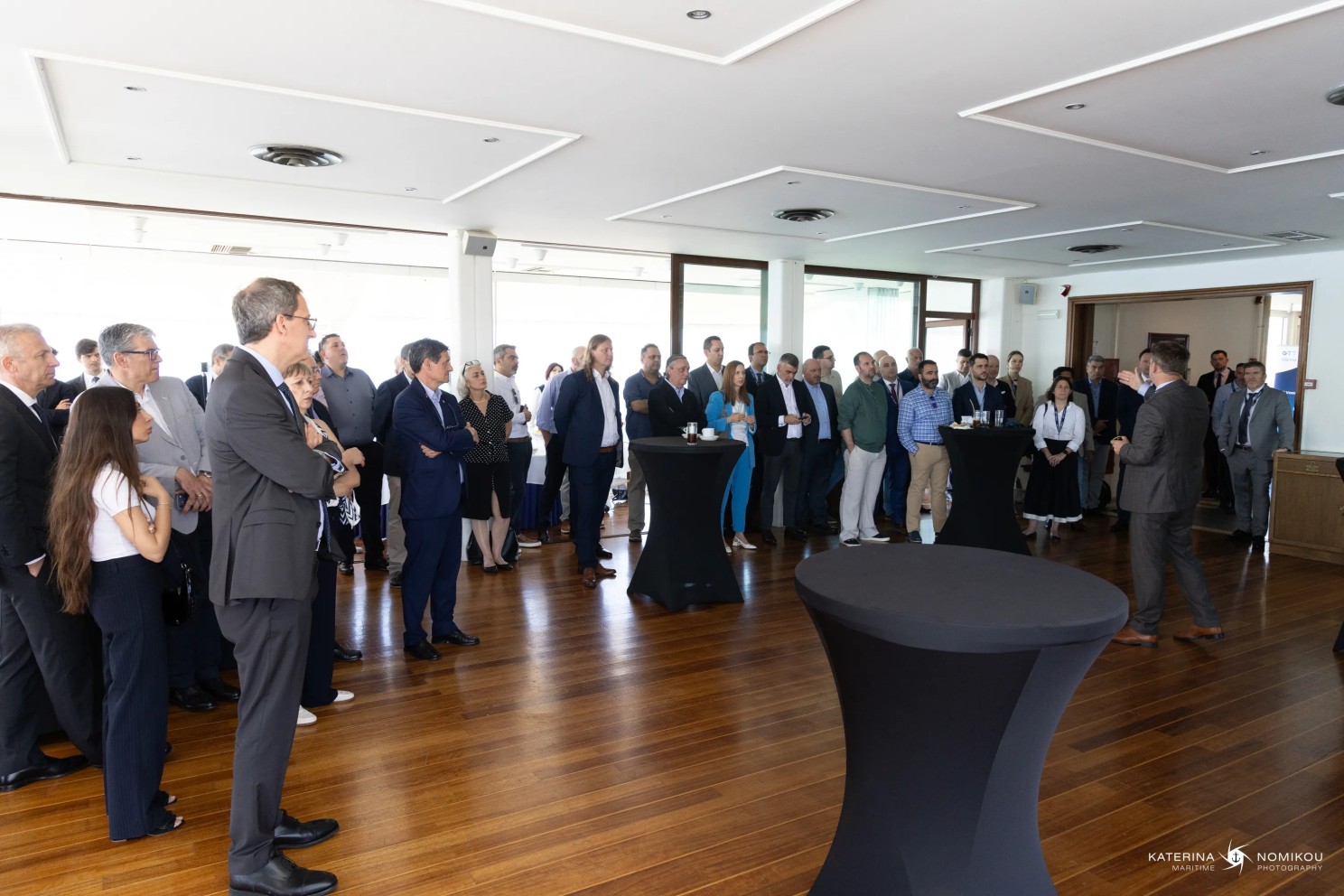
Ahead of @Posidonia 2026, GTT officially launched GTT Marine at the Yacht Club of Greece in Athens. The event brought together nearly 70 customers, prospects and partners, marking an important step in the Group’s new strategic structure. GTT Chief Executive Officer François Michel and GTT Marine Chief Executive Officer Casper Jensen presented the ambition and strategic vision behind the new division.
The launch of GTT Marine means that GTT is bringing together three complementary maritime digital businesses — Danelec, Ascenz Marorka and Vessel Performance Solutions — under a unified offering. The new division is designed to serve shipowners, operators and shipmanagement companies with integrated solutions covering onboard data acquisition, voyage optimisation, vessel performance management, safety systems and regulatory compliance.
More importantly, GTT has now reshaped itself around a clearer structure: one GTT brand, supported by two major business divisions. @GTT Energy carries the Group’s historic core business, focusing on containment systems and energy management systems. @GTT Marine brings together its growing maritime digital and operational technology activities, focusing on safety, operational performance, digital solutions and compliance.
In its first-quarter 2026 financial disclosure, GTT had already started reporting its performance under this new structure. @GTT Energy generated revenue of €178.1 million in the first quarter, while GTT Marine generated €14.4 million, representing around 7% of Group revenue.
This marks a significant shift in the way GTT positions itself. The company is no longer simply presenting itself as a technology licensor for LNG containment systems. It is increasingly positioning itself as a broader maritime technology platform covering newbuilding core technologies, vessel lifecycle services, digital fleet management and energy transition solutions.
GTT Energy: Reframing the Core Business
For decades, GTT’s best-known identity has been that of a leading provider of membrane containment systems for LNG carriers. Its Mark III and NO96 technologies are widely used across large LNG carriers, VLECs, FSRUs, FLNG units, LNG-fuelled vessels and onshore LNG storage tanks.
The business model is highly distinctive. GTT does not build ships. It is not a conventional equipment manufacturer. Instead, it provides technology licensing, engineering design, technical assistance, yard qualification, construction support, training and lifecycle services.
This is what makes GTT so strategically important in the LNG value chain. Shipyards build the vessels, shipowners own and operate them, energy companies and charterers drive the projects, but in the LNG cargo containment system — one of the most critical parts of the vessel — GTT has long played the role of technology standard-setter, engineering partner and patent holder.
With the formation of GTT Energy, the Group has not created a separate new company to replace its traditional business. Rather, it has placed its established core capabilities into a clearer strategic framework.
GTT Energy covers the areas where GTT has historically been strongest: liquefied gas containment systems, energy management systems, LNG carriers, ethane and multi-gas carriers, FLNGs, FSRUs, onshore storage, LNG-fuelled vessels and related engineering services.
In other words, GTT Energy is not a new story. It is the systematisation of GTT’s core business.
The financial performance of this business remains strong. In 2025, GTT reported revenue of €803 million, up 25% year on year. EBITDA reached €542 million, up 40%. The company also proposed a dividend of €8.94 per share. At the end of 2025, GTT’s core order book stood at 288 units, including 261 LNG carriers, 21 VLECs, three FSRUs and three FLNG projects.
This means GTT’s strategic transformation is not a defensive move driven by pressure on its traditional business. On the contrary, it is taking place while its core LNG containment business remains highly profitable and supported by a large order book.
GTT is using the strength of its cash flow, its patent base and its customer network to expand the boundaries of its business.
GTT Marine: Moving From the Cargo Tank to Fleet Operations
If GTT Energy represents the company’s established strength, GTT Marine represents its most visible second growth platform.
The logic behind GTT Marine is clear: to extend GTT’s business touchpoints from the shipbuilding phase into the operational life of the vessel.
Historically, GTT’s role has mainly been linked to the newbuilding stage. When a shipyard builds an LNG carrier, VLEC, FLNG, FSRU or LNG-fuelled vessel using GTT technology, the company provides the containment system design, engineering support, licensing and technical assistance.
That model is attractive and high-margin, but it is also naturally linked to newbuilding cycles. Even with strong order visibility, it can still be influenced by LNG carrier investment cycles, shipyard delivery schedules, energy project development and shipowner capital expenditure.
GTT Marine opens a different market: the global fleet already in operation, as well as new vessels entering service.
Today, shipowners and operators are no longer only being asked to build more efficient vessels. They are also being required to manage vessel performance, verify emissions, comply with increasingly complex rules and provide auditable data to charterers, regulators, financiers and insurers.
CII, EEXI, EU ETS, FuelEU Maritime, carbon clauses in charter contracts, Scope 3 pressure from cargo interests and broader safety and transparency requirements are all pushing shipping companies toward more reliable data infrastructure.
This is where GTT Marine is positioned.
According to GTT, the division combines onboard equipment, software solutions and data-driven services to help shipowners and operators address safety, operational performance and regulatory compliance challenges.
For shipowners, the value of these services is not limited to fuel savings. It also extends to voyage decision-making, hull and machinery performance assessment, emissions reporting, charter-party settlement, compliance documentation, incident investigation, fleet transparency and shore-based operational support.
In the past, GTT’s value was largely embedded inside the LNG cargo tank. With GTT Marine, the Group is trying to extend its influence to the bridge, the engine room, the shore control centre and the fleet management system.
A Strategy Built Through Years of Acquisitions
GTT Marine did not appear overnight. It is the result of a multi-year acquisition and integration strategy.
In 2017, GTT acquired a 75% stake in Ascenz, a Singapore-based smart shipping company focused on vessel monitoring and performance optimisation. Ascenz served shipowners and operators by helping them reduce fuel consumption and improve environmental performance.
In 2020, GTT acquired 100% of Marorka, an Icelandic company specialising in smart shipping solutions and vessel energy performance systems. Ascenz and Marorka were later combined into Ascenz Marorka, forming a key part of GTT’s digital capability.
In February 2024, GTT acquired Vessel Performance Solutions, a Danish company headquartered in Copenhagen with a sales office in Athens. VPS specialises in vessel performance management. Its VESPER software platform supports shipowners and operators with performance analysis and environmental compliance reporting based on operational vessel data.
The transaction that significantly expanded GTT’s digital footprint was its acquisition of Danelec. In May 2025, GTT announced the acquisition of Danelec for €194 million, and the transaction was completed in July 2025. Danelec is an important supplier of vessel data acquisition systems, voyage data recorders, shaft power meters, high-frequency data transmission solutions and safety-related maritime digital systems.
With Danelec added to the portfolio, GTT’s maritime digital offering changed in scale and depth.
Ascenz Marorka provides voyage optimisation and energy performance management. VPS adds vessel performance analytics and compliance reporting. Danelec brings onboard data collection hardware, VDR systems, safety solutions and high-frequency data infrastructure.
GTT Marine is the point at which these businesses are no longer simply acquired assets. They are being turned into a unified brand, a unified platform and a clearer customer interface.
From Project-Based Revenue to Lifecycle Services
GTT’s traditional revenue has been driven largely by containment system licensing and engineering services. This is a high-margin and high-barrier business, but much of it is linked to newbuilding projects.
GTT Marine has a different strategic value. It can extend GTT’s revenue model from the newbuilding phase into the full operational lifecycle of vessels.
After an LNG carrier, dual-fuel vessel or large merchant ship is delivered, it still requires continuous performance monitoring, voyage optimisation, emissions calculation, safety recording, data transfer and compliance management. These are not one-off project services. They can continue throughout a vessel’s operational life.
This gives GTT an opportunity to build more recurring and lifecycle-based relationships with shipowners and operators.
From that perspective, GTT Marine could help reduce GTT’s dependence on a single newbuilding cycle. Even if LNG carrier new orders slow in a given year, demand for fleet efficiency, compliance, safety monitoring and digital management can continue to grow across the operating fleet.
GTT’s first-quarter 2026 figures already show the beginning of this shift. Marine and digital solutions generated €14.4 million in revenue, mainly driven by the contribution of Danelec. GTT Marine’s share of Group revenue increased from 2% in the first quarter of 2025 to 7% in the first quarter of 2026.
GTT Marine remains much smaller than GTT Energy. But its strategic importance lies less in its immediate revenue size and more in the new long-term link it creates between GTT and the global operating fleet.
Transformation With Boundaries
GTT’s expansion has not been limited to maritime digitalisation. In 2020, the Group acquired Areva H2Gen, a French PEM electrolyser company later renamed Elogen, as part of an attempt to enter the green hydrogen value chain.
That move has proved more difficult. In 2025, GTT launched a strategic review of Elogen. The Group disclosed that, against a challenging green hydrogen market environment, Elogen had not secured major orders in 2024 and recorded an EBITDA loss of around €33 million. GTT subsequently indicated that Elogen’s long-term positioning would be narrowed toward research and development, while the construction of the Vendôme gigafactory would be suspended.
This experience shows that GTT’s attempt to extend beyond LNG containment into broader energy transition technologies is not without limits. Not every adjacent market can replicate the success of its original containment business.
GTT Marine, however, appears to have stronger strategic adjacency.
Vessel data, safety equipment, performance management and compliance services are sold to the same broad customer universe that GTT already knows well: shipowners, shipyards, energy companies, charterers and shipmanagers.
In particular, as LNG carriers and dual-fuel fleets continue to expand, GTT’s understanding of vessel design, cryogenic systems and newbuilding projects gives it a natural entry point into fleet operations and digital performance management.
This makes the current transformation more than a simple move from LNG technology into software. It is an extension around the same customers, the same vessel assets and the same energy transition pressures.
Why This Matters for Global Shipping
For the global shipping industry, GTT’s move reflects a broader structural change.
The next phase of maritime competition will not be decided only by who owns the most efficient hulls or who orders the newest fuel-ready ships. It will increasingly be shaped by who can manage vessel data, emissions, safety, compliance and performance across the life of the asset.
Shipowners are facing a more demanding operating environment. Charterers want reliable emissions data. Regulators want verifiable reporting. Financiers are looking more closely at transition risk. Insurers and class societies are paying greater attention to safety and transparency. Managers need better tools to support increasingly complex fleets.
Against this backdrop, maritime technology providers are moving closer to the operational core of shipping.
GTT’s strategic shift is therefore not only a corporate restructuring story. It is part of a wider move in which technical companies are trying to capture more value from the vessel lifecycle rather than from the newbuilding project alone.
In this context, GTT Marine is not just an add-on to GTT Energy. It could become a bridge between ship design, vessel operations, emissions management and digital compliance.
From Technology Moat to Data Moat
From Mark III and NO96 to Ascenz Marorka, VPS and Danelec, GTT’s expansion can be summarised in one sentence: the company is trying to connect its cryogenic containment technology moat with a vessel operating data moat.
In the past, GTT’s competitive advantage was embedded in the LNG cargo tank. To build a large LNG carrier, shipyards needed containment system design, engineering experience, certified supply chains and construction support. GTT built its position through patents, know-how and project execution experience.
In the future, GTT appears to be aiming for a second layer of advantage in vessel operations.
Vessel performance data, voyage data, fuel consumption data, emissions data, safety data and equipment condition data are becoming part of shipping’s new infrastructure. Companies that can collect, process, interpret and apply this data accurately may become long-term technology partners for shipowners and operators.
This is the deeper meaning behind the launch of GTT Marine.
It is not just a brand integration exercise. It is a visible step in GTT’s transition from a newbuilding technology licensor to a vessel lifecycle technology provider.
Conclusion
The launch of GTT Marine does not replace GTT’s traditional LNG containment business. It extends it.
GTT Energy continues to carry the Group’s core business in LNG and liquefied gas containment systems, protecting the high-barrier foundation on which the company has built its global position. GTT Marine, meanwhile, opens a new front in fleet operations, combining onboard equipment, data acquisition, voyage optimisation, performance management and regulatory compliance.
For years, GTT has often been seen as a company that makes money from LNG membrane containment patents. That description is still partly true, but it is no longer complete.
Today, GTT is trying to redefine itself as a broader technology platform across energy transportation, containment systems, vessel operations data and digital compliance.
For global shipping, this points to a larger industry shift. Critical maritime technology is no longer located only in the hull, the cargo tank or the engine room. It is increasingly embedded in data systems, algorithms, compliance platforms and operational decision-making tools.
For GTT, GTT Energy is the foundation. GTT Marine is the new variable.
The key question is whether these two divisions can create meaningful synergies: one anchored in high-end vessel construction, the other connected to long-term vessel operations.
If GTT can make that model work, it may no longer be just the technology company behind the LNG cargo tank. It could become one of the key digital infrastructure providers for the next generation of global fleet operations.
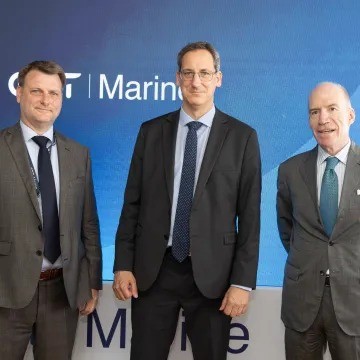
Francois Michel , CEO of GTT, and Casper Jensen , CEO of GTT Marine

READ MORE
 Technology
Shiptec China 2026.10.28-10.30 | The Green and Intelligent Ship Water - pump Solution of Beijing Tanxianda Pump Technology Development Co., Ltd.
 Technology
Amazon Leo Moves Into Shipping, Opening a New Front in Maritime Satellite Connectivity
 Technology
GTT Marine Lands Flagship Digitalisation Project for PETRONAS’ Chartered LNG Fleet
 Technology
Shipping’s AI Future Will Still Depend on People, Says Dr.Martin Stopford
 Technology
Air Lubrication Moves into the Mainstream as Silverstream Passes 160 Ships in Service
 Technology
Air lubrication delivers at scale as Silverstream surpasses 160 installations
 Technology
Shiptec China 2026 | South Korean Marine Equipment Suppliers to Make a Major Group Debut, Bringing Core Equipment to Dalian for the First Time
 Technology
Worried Yet? Mandatory AI Monitoring Is Coming to China’s Domestic Fleet
 Technology
China and Thailand Sign MoU to Strengthen Industrial and Supply Chain Cooperation
 Technology