


Qingdao Port Completes China’s First Bio-LNG Bunkering for International Shipping


On 25 November, Qingdao Port completed China’s first liquefied biomethane (LBM) bunkering operation for an internationally trading vessel, marking a further step in the country's development of alternative marine fuel infrastructure.
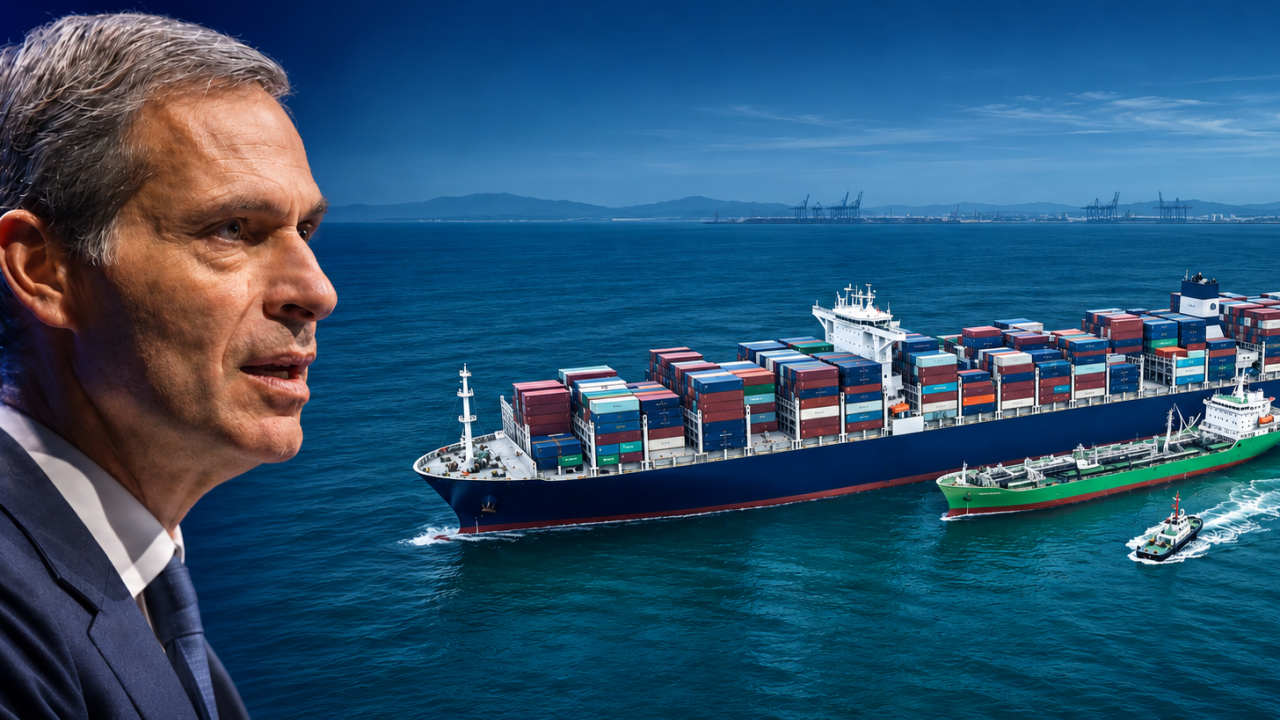
The operation took place at Berth 105 of Qingdao New Qianwan Container Terminal (QQCTN), where KOTA ODYSSEY, an 8,200 TEU LNG dual-fuel containership operated by Pacific International Lines (PIL), received ISCC-certified liquefied biomethane, also known as bio-LNG, through a truck-to-ship bunkering operation. It also marked PIL’s first use of the renewable fuel.
The operation was jointly facilitated by Qingdao Port, PIL and Sinopec, with Ark Intelligence and QQCTN responsible for its implementation. Supported by local maritime, customs and other regulatory authorities, the parties worked together to address fuel storage and transportation, operational safety and regulatory compliance, establishing a supply chain for future bio-LNG bunkering operations.
Produced from organic waste materials such as crop residues and livestock manure, biomethane offers significant potential to reduce lifecycle greenhouse gas (GHG) emissions.
One of the key advantages of bio-LNG is its compatibility with existing LNG-powered vessels and bunkering infrastructure. As a drop-in fuel, it can be used without modifications to existing LNG propulsion systems, providing shipowners with an additional decarbonisation pathway while making use of existing investments in LNG technology.
According to PIL, the batch of bio-LNG supplied at Qingdao Port is expected to reduce well-to-wake emissions by more than 70% compared with conventional marine fuel oil and by around 70% compared with fossil LNG.
As the global LNG dual-fuel fleet continues to expand, bio-LNG could play an increasingly important role in maritime decarbonisation. Its wider commercial adoption, however, will depend on fuel availability, pricing, sustainability certification and the management of methane slip.
Qingdao Port, part of Shandong Port Group, has been expanding its alternative marine fuel capabilities in recent years. Previous milestones include northern China’s first B24 marine biofuel bunkering operation, truck-to-ship methanol bunkering and ship-to-ship green methanol bunkering.
The addition of bio-LNG further diversifies Qingdao Port’s marine fuel offerings and strengthens its position as an emerging alternative fuel bunkering hub in Northeast Asia.
With multiple marine fuel pathways emerging across the shipping industry, the ability to supply a diverse range of low-emission fuels is becoming an increasingly important competitive factor for major international ports.
Qingdao Port plans to further expand its alternative fuel bunkering network, standardise operational and safety procedures, and develop regular commercial bunkering services as part of its ambition to become a clean marine fuel bunkering hub in northern China.


READ MORE
 Sustainability
Five Key Issues Continue to Divide IMO Member States over the Net-Zero Framework
 Sustainability
Shanghai Targets One Million Tonnes of Green Fuel Bunkering Capacity by 2028
 Sustainability
The Missing Global Carbon Price Holding Back Green Shipping Investment
 Sustainability
CMA CGM’s Saadé Warns Net Zero by 2050 Is Out of Reach Under Current Conditions
 Sustainability
Green Ammonia Moves Closer to Commercial Shipping Applications
 Sustainability
IBIA Launches Marine Energy Outlook Survey
 Sustainability
UK's Own “FuelEU Maritime” Is on the Way!
 Sustainability
Nine Shipping Associations Call for Global GHG Rules Ahead of MEPC 85
 Sustainability
Three More African Countries Set to Join Regional Shipping Carbon Levy Scheme
 Sustainability