


CMB.TECH’s Jan De Beurme: Shipping Cannot Wait for Perfect Certainty

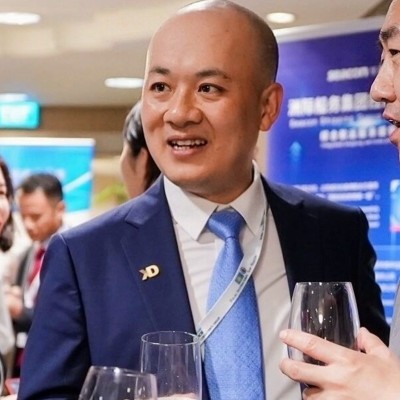
Capital, technology and the economic conditions for cleaner shipping are increasingly coming together. The industry now needs to turn those elements into operating projects, CMB.TECH Chief of Staff Vice-admiral (Ret.) Jan De Beurme told the 2026 North Bund International Shipping Forum in Shanghai.
Speaking at the maritime main forum on 20 October, the retired vice-admiral presented a case for moving ahead with decarbonisation while recognising the uncertainties involved. His address, “From Vision to Voyage: Charting a Shared Green Maritime Future”, linked investment in vessels and fuels with a wider question of leadership: how to make responsible decisions when the information available is still incomplete.
“Today, I believe those pieces are increasingly on the table, and the question is no longer whether the puzzle can be made, but whether we are prepared to start assembling it.”
The puzzle metaphor captured the structure of his argument. Long-term capital needs viable projects, new technologies need practical deployment, and improving fuel economics need the support of production and logistics. Progress depends on bringing those elements together through commercial cooperation.

Capital Needs Projects That Connect Ships, Energy and Infrastructure
De Beurme identified capital as the first essential component. Long-term funds already exist across shipping, energy, mining and infrastructure, he argued, and investors are looking for projects offering both economic value and strategic relevance. He pointed to substantial investment in China and Europe as evidence that the opportunity is attracting resources.
In his assessment, decarbonisation should increasingly be understood as investment in vessels, fuels, infrastructure and the resilience of the maritime economy. This places a shipowner’s capital expenditure within a wider industrial process. A vessel designed for a new fuel needs access to supply; fuel producers need dependable demand; and storage and bunkering providers need enough activity to support their facilities.
The commercial implication is that an individual asset may become more investable when its relationship with the rest of the supply chain is clearer. Fuel procurement, transport demand and infrastructure commitments can help different participants assess their exposure. Capital can support the transition more effectively when those arrangements develop alongside the ships themselves.
Technology Becomes More Useful Through Deployment
Technology was the second component of De Beurme’s argument. Technical immaturity had previously provided a reasonable basis for caution, he said, but the available capabilities have advanced. Renewable fuels can increasingly be produced, transported, stored and bunkered, while ammonia-powered vessels and hydrogen-related technologies are moving further into maritime applications.
He placed these developments within shipping’s history of propulsion changes, from oars to sails, steam and diesel. Each transition required investment and persistence. The emerging use of new fuels could represent a fifth major propulsion revolution, in his view, with practical experience helping to improve technologies after their initial introduction.
This is an argument for learning through deployment. Operating vessels generates experience with equipment, fuel supply, maintenance and voyage planning that cannot be obtained entirely from development programmes. That experience can inform subsequent designs and operating procedures, helping owners, suppliers and shipyards understand where further improvements are needed.
CMB.TECH’s own fleet programme provides a concrete setting for this approach. On 9 October, the company announced that the 210,000-dwt Mineral Europa had embarked on its maiden voyage to Australia. It also outlined scheduled deliveries of 21 ammonia-powered vessels through 2029, comprising 18 dry bulk carriers, one containership and two chemical tankers.
The vessel retains the ability to operate on conventional marine fuels as well as ammonia. That flexibility allows deployment to proceed while the ammonia bunkering network develops, connecting investment in new propulsion capability with the practical conditions of international trading.
The Economic Comparison Is Changing
De Beurme’s third component was economic viability. He acknowledged that green fuels are currently more expensive in some applications. His argument was that the comparison is changing as conventional fuels face additional exposure to carbon pricing, regulatory uncertainty and geopolitical disruption, while innovation, larger production volumes and industrial scale can reduce the cost of greener alternatives.
His opening discussion of conflict gave this economic argument a wider context. Geopolitical tensions affect route selection, restrict access to some waters and raise insurance costs, while disrupting energy, food and other essential supply chains. In his assessment, the resilience of an energy and transport system belongs within the investment calculation.
This approach broadens the questions companies need to ask about fuel costs. The delivered price matters alongside availability, distribution, vessel performance and exposure to future requirements. The balance will vary by route, fleet and contract. De Beurme’s expectation was that, in a growing range of circumstances, the cost of delaying low-carbon investment could exceed the cost of acting earlier.
For individual projects, that proposition still has to be demonstrated through operating results. Fuel consumption, supply costs, vessel utilisation and customer commitments will determine how the investment performs. His argument treats fuel economics as a changing relationship between technology, production scale and operating experience.
CMB.TECH Is Connecting Vessel Demand with Fuel Supply
The company’s recent activity illustrates how these ideas can be organised into a project. On 13 October, a week before De Beurme’s North Bund address, Mineral Europa received 1,000 tonnes of green ammonia from Shenghang Yongle at Zhoushan, China. FKAB Marine Design, which designed the bunker vessel, reported that the operation was jointly conducted by China Energy Engineering Group Hydrogen Energy, CMB.TECH and Jiangsu Andefu Energy Technology.
The preparations extended well before the receiving vessel entered service. In December 2025, CMB.TECH announced a green ammonia offtake agreement covering production from CEEC Hydrogen Energy’s Songyuan project in Jilin province, together with a planned minority investment in Andefu. The announcement connected future vessel demand with fuel production, storage, distribution and the development of ship-to-ship bunkering.
These arrangements offer a practical example of the coordination discussed in De Beurme’s speech. A shipowner’s purchasing commitment gives a producer prospective demand. Logistics and storage connect production with the location and timing of a vessel’s requirements. Bunkering capability completes the link between an available fuel and its use at sea.
The operating challenge now extends beyond completing an initial transfer. A growing fleet will require repeated deliveries, dependable scheduling and costs that customers and owners can support over time. The first operations provide experience from which the participating companies can develop those services.
Leadership Requires Decisions Before Every Uncertainty Is Resolved
De Beurme drew on his naval experience when explaining the decision-making challenge. Responsible leadership rarely has the benefit of complete information, he argued. It requires a clear understanding of the mission, an assessment of the risks, identification of the essential issues and a considered decision.
Applied to shipping, this means evaluating investment while fuel networks, technology and market conditions continue to develop. Waiting also has consequences: vessels take time to build, infrastructure needs preparation, and operational knowledge accumulates through use. His case for action rested on judging when enough of the necessary conditions are in place to proceed responsibly.
Cooperation was central to that judgement. De Beurme described shipping’s longstanding role in connecting producers with consumers and resources with industry. That position gives maritime companies an opportunity to participate actively in the energy transition, bringing transport demand and operational expertise into decisions about fuel production and distribution.
His address therefore placed leadership and collaboration alongside capital, technology and economics. Available funding and technical capability still need participants willing to commit resources, coordinate projects and learn from operating experience. For global shipping, the next stage of decarbonisation will be tested through those commitments: ships entering service, fuels reaching them reliably, and commercial relationships supporting continued operation.


READ MORE
 People
Paolo Moretti Be Named as RINA Group CEO
 People
DP World Promotes Jason Varsamidis to Lead Asia Pacific as Logistics Network Expands
 People
G2 Ocean Names SK Lim CEO as Arthur English Takes the Helm at Gearbulk
 People
COSCO SHIPPING Chairman Wan Min Identifies Four Shifts Reshaping Global Shipping
 People
Global Maritime Leaders Arrive in Manila as Seatrade Maritime Crew Connect Global 2026 Opens
 People
Asia is no longer just driving shipping growth – it is shaping the industry’s future
 People
What John Lee’s Speech Signals for Hong Kong’s Maritime Industry over the Next Five Years
 People
PIL Names Wan Chee Foong as Next CEO: A New Chapter Driven by Ports, Logistics and Strategy
 People
DNV’s Norbert Kray: China’s Shipbuilding Edge Now Extends Far Beyond Cost and Scale
 People