


What Kind of Talent Will Shipping Need in the Future?


If the requirements for tomorrow’s maritime professionals were written as a recruitment checklist, it would be a long one. Candidates would be expected to understand ships, markets and customers, while also being comfortable with data, technology, decarbonisation and regulation. They would need to analyse complex problems, make decisions with incomplete information and work across different cultures, legal systems and commercial practices. As artificial intelligence enters more shipping workflows, another requirement is emerging: knowing which tasks can be delegated to machines and which decisions still require human accountability.
Yet during “The Big Issues” panel at @Splash Singapore 2026, X-Press Feeders CEO Shmulick Yoskovitz offered a strikingly simple assessment: “Shipping is a very simple business.”
He was not suggesting that freight markets are easy to predict or that running a fleet lacks technical complexity. The same discussion covered port congestion, geopolitical disruption, fuel transition, carbon regulation and AI. His point concerned the foundations on which shipping companies identify and develop people. External conditions may continue to add new variables, but valuable maritime talent still rests on a relatively small number of enduring qualities. No individual can arrive with every answer. Companies need people who can keep learning, understand the business, build relationships and revise their judgment when old assumptions no longer hold.
A More Complex Industry Still Depends on Enduring Human Qualities
Moderator Sam Chambers had asked whether the type of employee valued by shipping companies had changed as the operating environment became less predictable and AI entered daily work. Yoskovitz replied that, despite all the uncertainty, the industry still needed fundamentally the same kind of people.

Drawing on 35 years in shipping, he highlighted three qualities he had always looked for:
curiosity, good people skills and a willingness to be international.
These requirements may not sound new, yet they correspond closely to three defining characteristics of shipping. It is a cyclical industry, so people must keep asking why markets move. It is a highly collaborative industry, in which the operation of a single vessel connects owners, charterers, cargo interests, seafarers, shipyards, ports, brokers, banks, insurers and regulators. It is also inherently international: assets, cargoes, finance, contracts and personnel often sit in different countries and jurisdictions. Technology can improve the speed at which information moves through this system, but it does not remove the relationships on which the system relies.
Curiosity therefore remains one of the most important qualities in maritime talent. In a commercial setting, curiosity means pursuing the causes behind an operating result. Why can the same vessel produce very different returns on two routes? How can seven days of port waiting reduce a scheduled liner service by several annual voyages? Why might an alternative fuel that was uneconomic a year ago become viable under today’s fuel and regulatory costs? How can a backup system that appears inefficient in normal conditions protect an entire fleet during a disruption?
Historical experience remains valuable, but many future problems will not repeat the past in a familiar form. Red Sea disruption, wider sanctions, regional carbon regimes, competing fuel pathways and artificial intelligence are now affecting shipping at the same time. Long-term decisions can no longer rely on one conventional cycle model. Curiosity has acquired greater commercial value because it pushes people to investigate changing relationships and prevents yesterday’s successful practices from becoming tomorrow’s unquestioned assumptions.
People Skills Will Not Lose Value in a Digital Industry
Discussions about digitalisation can create an image of future shipping dominated by highly technical specialists and increasingly automated models. Yoskovitz nevertheless placed people skills at the centre of his answer. That emphasis reflects the commercial structure of the industry. Digital platforms can provide vessel positions, freight indications, fuel consumption, carbon intensity and port waiting times. They cannot, by themselves, determine how risk should be divided in a charter party, how much a customer will pay for schedule reliability, whether seafarers feel safe reporting a problem or whether partners will share the cost of testing a new technology.
Many consequential shipping decisions cannot be fully standardised. An owner and a charterer may agree contractual provisions for fuel and carbon costs, yet route changes, equipment failures or regulatory developments can still create situations that were never fully anticipated. At that point, companies need people who can understand the interests of the other side, preserve trust and negotiate a workable outcome. Technology can bring better information to the table, but agreement still depends on human communication.
People skills also determine whether accurate information can travel through an organisation. If frontline personnel on ships or in ports fear being blamed for raising problems, risk signals may be filtered out before they reach management. If commercial and technology teams lack a common language, an expensive digital system may never move beyond demonstration. If senior management cannot explain why a strategy is changing, even a sound decision can become distorted during implementation. Future maritime professionals therefore need the ability to listen, explain and coordinate. Organisational resilience depends heavily on whether information can cross hierarchies and become timely action.
International Mindedness Has Become an Operating Capability
Yoskovitz’s third enduring requirement was a willingness to work internationally. Shipping has always crossed borders, but international capability now carries a wider meaning. Employees must understand differences in regulation, customer structures and business practices, while recognising that geopolitics increasingly affects routes, finance, insurance, flags, crewing and equipment procurement. International mindedness goes beyond a willingness to travel or accept an overseas posting. It is the ability to retain sound judgment while operating across different institutional and cultural environments.
The regionalisation of supply chains and the fragmentation of regulation have increased the value of such people. A shipping company may simultaneously be dealing with the EU carbon market, alternative-fuel availability at different ports, cross-border financial settlement and sanctions rules in several jurisdictions. Experience from one market rarely covers the entire problem. Companies need people who can understand local conditions and still see the connections between regions, reducing the risk that a locally rational decision creates a larger exposure elsewhere in the fleet.
International capability also requires comfort with differences in perspective. Customers, seafarers and business partners from different countries may view safety, efficiency, risk and long-term returns through very different lenses. Strong professionals do not have to agree with every view, but they need to understand how the other party reached it and where cooperation remains possible. As geopolitical divisions deepen, the ability to work across cultures will become scarcer and more commercially important.
Data Literacy Is Becoming the Basic Language of Shipping
Alongside curiosity, people skills and international experience, Yoskovitz identified one clear change over the past five to seven years: data analysis has become far more important. He stressed that employees do not need to be statisticians or hold PhDs. They do need to understand what numbers mean and what drives the profit and loss account. When X-Press Feeders recruits management trainees, it looks for candidates with some analytical or statistical grounding as well as the ability to deal confidently with people. Much of the industry-specific knowledge can be taught after they enter shipping.
The boundary around “data literacy” matters. Companies do not simply need employees who can produce charts or operate software. They need people who can connect data with commercial outcomes. When fuel consumption rises, someone must determine whether speed, weather, hull condition or routing is responsible. When revenue increases on a service, the contribution of freight rates, utilisation and voyage frequency must be separated. When port waiting time grows, the analysis should extend to annual voyage capacity, sellable slots and customer connections across the wider network.
Data literacy is therefore a form of commercial interpretation. Data can describe what has happened; people must still decide why it happened, whether it will continue and what the company should do next. As the volume of data grows, causal relationships can become harder to identify because several indicators may move together without one directly driving the other. A company that treats “data-driven” management as unconditional obedience to a model risks confusing calculation with judgment. Future professionals must be able to examine data quality, question model assumptions and recognise the real-world conditions that a model has left out.
This is why P&L awareness matters. Installing technology, dropping a port, changing speed or adding an owned vessel can redistribute costs and benefits across several parts of the business. A decision that improves one visible performance indicator may look very different when placed within the full profit and loss account. People who understand the underlying P&L drivers are better equipped to determine whether a technology or operating change has created genuine value.
The Definition of a Shipping Generalist Is Changing
Swire Shipping CEO Jeremy Sutton extended the discussion to senior management. He observed that many leaders of shipping companies are generalists, which reflects the breadth of decisions they must make across customers, markets, operations, assets and finance. The balance within that generalist skill set is changing, however. Data, analytics and technology can no longer sit entirely outside the concerns of commercial leadership.

Sutton said Swire Shipping was spending more on technology each year, while external benchmarks still indicated that shipping underinvested compared with many other industries. The company increasingly needs senior talent that understands P&L, customers and commercial operations while also bringing a strong technology perspective.
Tomorrow’s shipping executive may never write code, but must be capable of asking a technology team the right questions. What operating problem is a system intended to solve? Where does its data come from? What assumptions sit inside its model? Which safety, cost or customer outcomes should improve after deployment? When management lacks this understanding, technology procurement can become supplier-led and commercial teams may retreat to old working methods because they do not trust or understand the system.
The requirement works in both directions. Technology specialists need stronger commercial awareness. An algorithm can recommend a fuel-efficient speed, while the business still has to account for schedules, port windows and customer commitments. A chartering platform may match ships and cargoes quickly without fully capturing counterparty risk or the value of a long-term relationship. Shipping will need more people who can work at these professional boundaries, connecting vessel operations, commercial requirements and technological capabilities. Effective generalists will have a clear area of competence while also being able to understand the language of other functions and align them around one business objective.
Intelligence, Integrity and Drive
Anglo-Eastern Univan Group CEO Bjorn Hojgaard summarised his own talent philosophy in three words: intelligence, integrity and drive. Their meaning reaches further than a simple call for smart, honest and energetic employees.
For Hojgaard, intelligence includes adaptability and the ability to learn and unlearn. When the assumptions supporting an earlier decision cease to hold, a person must be capable of changing course. Shipping has accumulated a rich body of cyclical experience, but energy transition, sanctions and regional regulation are producing situations without exact historical equivalents. Future professionals must know when history remains a useful guide and when the conditions around an old lesson have changed.
Integrity also extends beyond honesty. Hojgaard described it as a judgment system, a “true north” that provides direction under pressure. Shipping companies regularly encounter situations that procedures cannot fully cover: safety may conflict with schedule performance, short-term earnings with long-term reputation, and uncertain returns with decarbonisation commitments. No rulebook can anticipate every combination. Organisations ultimately depend on people whose judgment remains anchored when the answer is unclear and who are willing to take responsibility for the decision.
Drive is the ability to convert intelligence and integrity into results. Analysing a problem, identifying risk and selecting a direction complete only part of the task. Shipping is intensely execution-driven: every strategy must eventually reach a vessel, crew, port, customer or contract. Without the capacity to mobilise people and follow through, sound analysis stays in meeting papers. Hojgaard’s argument was that these three foundations continue to hold even as the world around the industry changes.
AI Will Reduce the Value of Possessing Answers and Increase the Value of Asking Questions
As AI enters shipping, the cost of many traditional knowledge tasks will fall. Regulatory research, market summaries, report preparation, contract comparisons and first-stage analysis can all be completed more quickly. Advantages based mainly on access to information will weaken as more employees gain rapid access to material that previously required years of accumulated files, contacts and manual searching.
The greater differentiation will lie in how people use that information. When AI produces a conclusion, someone must ask whether the input data are complete, whether the model has excluded a critical condition and whether the recommendation applies to the vessel, route and contract concerned. A precise-looking answer may rest on an incorrect port time, an outdated fuel price or weather data that do not fit the voyage. Inexperienced users may accept a confident output. Professionals with domain knowledge and data literacy will continue questioning it.
AI will also make accountability more visible. A system can suggest a speed change, a route adjustment or a maintenance intervention, but decisions affecting safety, contractual performance and major capital exposure still need a clearly accountable owner. When models, experience and frontline information point in different directions, a person must decide which course to follow and be able to explain the basis for that choice.
The ability to formulate questions will therefore become a central maritime skill. Good questions define risk, expose assumptions and connect data with commercial objectives. More information does not automatically produce better management; without disciplined inquiry, it can simply create more noise. People who can break an ambiguous operating problem into questions that can be tested will create more value than those who are merely proficient with the latest tool.
Professional Expertise Still Matters, but Its Use Is Evolving
The emphasis on curiosity, generalist capability and trainability does not diminish the importance of naval architecture, marine engineering, nautical operations, safety or regulatory expertise. Shipping involves human lives, high-value assets and environmental risk. Many roles require years of training, certification and practical experience. Without professional depth, it is difficult to identify abnormal data or judge whether an AI recommendation is consistent with the physical reality of a ship.
What is changing is how specialist knowledge is used. Professional competence has traditionally been associated with mastery of rules, accumulated cases and stable experience. Future specialists will also need to understand the limits of their knowledge and collaborate with commercial, data and technology teams. A strong marine engineer should be able to explain how equipment risk affects schedules, costs and asset life. A capable commercial manager should understand how vessel efficiency and carbon exposure alter voyage economics.
The people most in demand may increasingly resemble “T-shaped” professionals: deep in one field and able to work horizontally across the wider operating system. Shipping needs specialist depth to protect safety and quality, along with cross-functional understanding that prevents each department from optimising its own indicator in isolation. Many of the hardest problems appear at departmental boundaries, where responsibility is most likely to become unclear and information is most easily lost.
Recruitment and Development Must Change as Well
If shipping companies accept this talent framework, recruitment cannot focus only on how much maritime terminology a candidate already knows. Academic background and industry experience provide useful signals, but they do not demonstrate whether someone can relearn when assumptions fail, identify P&L drivers in a dataset or move a decision through a cross-cultural team.
Assessments can be designed around realistic operating problems. A candidate might be asked to analyse a service losing voyages because of port congestion and connect waiting time with revenue, cost and customer performance. A dataset with deliberate gaps can reveal whether the candidate checks its quality before calculating an answer. A scenario involving tension between safety and schedule can expose the person’s judgment system. A collaborative exercise involving competing interests can show how the candidate communicates, listens and builds agreement. Such exercises reveal more about the structure of a person’s thinking than the ability to repeat industry knowledge.
Development programmes should also reduce long-term isolation between departments. Commercial employees need exposure to vessel operations and technical projects; technical staff need contact with customers and P&L; younger employees need opportunities to rotate across businesses and regions. International capability is difficult to acquire in a classroom, and commercial judgment cannot be formed by reading reports alone. People need access to real problems, room to make decisions within controlled limits and the opportunity to learn from the consequences.
Management must also create an environment in which unlearning is possible. If an organisation rewards only agreement with established views, employees will conceal bad news. If changing one’s mind is treated as weakness, managers may continue following a plan after recognising that its assumptions have failed. Companies asking employees to remain curious, understand data and adapt quickly must make challenge, review and revision part of normal management practice.
The Scarce Talent Will Be the People Who Can Connect
Taken together, the views of Yoskovitz, Sutton and Hojgaard form a coherent picture. Future maritime professionals will need curiosity to detect change, data literacy to understand it, domain expertise to judge it, people skills to coordinate interests, integrity to set the boundaries of decision-making and drive to turn judgment into results.
These qualities rarely sit neatly within one job description and cannot be created through a single training programme. Shipping companies will need to reconsider how talent is distributed: which positions require deep technical specialisation, which roles must connect functions, which decisions should move closer to the frontline and which major risks should remain concentrated at senior level. Competition for talent will increasingly become competition between organisational systems, because even an exceptional individual can contribute little without access to reliable information and the authority to exercise judgment.
Shipping will continue to need people who understand vessels, people who understand markets and people who understand technology. The scarcest professionals will be those who can connect these bodies of knowledge. They may not arrive with complete maritime expertise, but they will know how to keep learning. They will not mistake data for an answer, but will know how to discover the right question within the numbers. They will be able to use AI while recognising which responsibilities cannot be delegated to it. They will understand global markets while remaining connected to the realities of individual ships, customers and teams.
Shipping may never become easy to predict. Market cycles, geopolitics, technology pathways and regulation will continue to overturn corporate plans. The enduring value of talent lies in what happens after the plan stops working: whether a company still has people who can understand what has changed, decide what should happen next and move the organisation forward.

READ MORE
 Careers & Jobs
Invitation to Participate in the Survey on Global Seafarers’ Physical and Mental Health and Rights Protection
 Careers & Jobs
Crew Remuneration Rises 8–10% as Chinese Shipping Group Steps Up Investment in Seafarers
 Careers & Jobs
HKSR Logo & Tagline Design Competition Rules (“Competition Rules”)
 Careers & Jobs
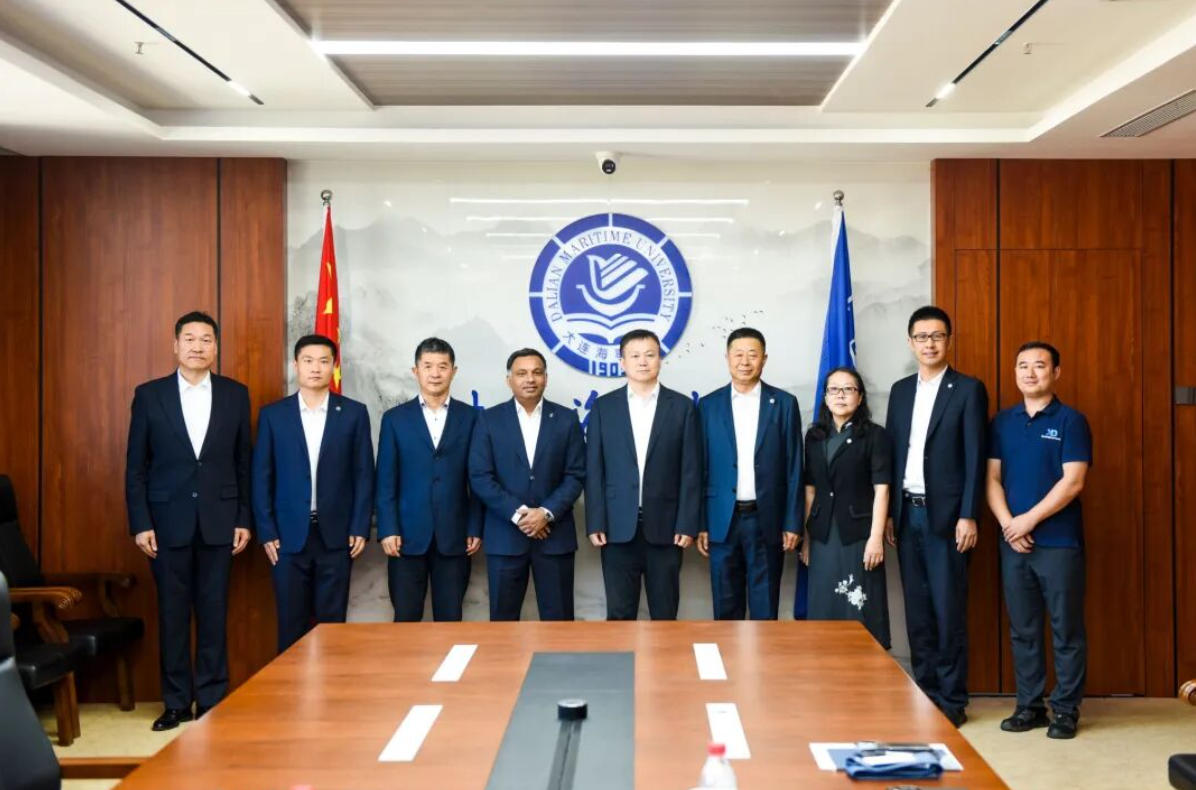
Fleet Management and Dalian Maritime University Sign Training agreement to Strengthen Seafarer Training in China
 Careers & Jobs
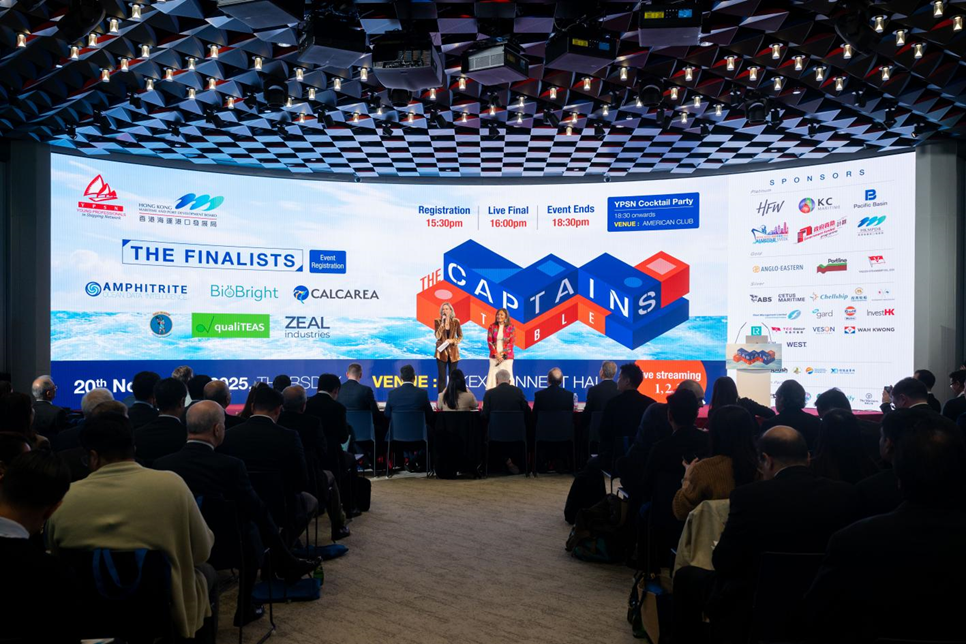
The Captain's Table Returns Bigger Than Ever: 2026 LIVE Finals to Set Sail in Hong Kong
 Careers & Jobs
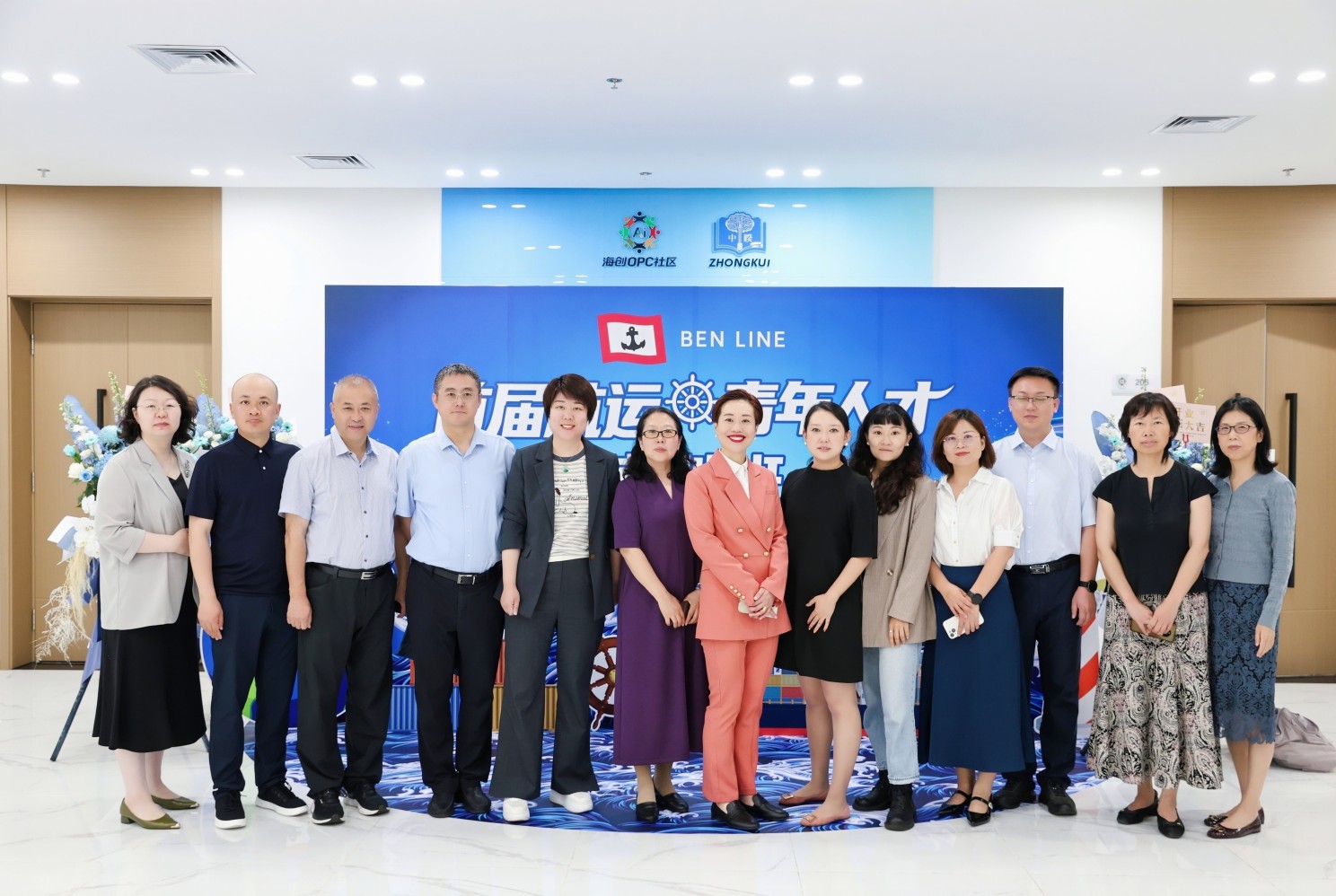
Why Did 200-Year-Old Ben Line Choose Dalian?
 Careers & Jobs
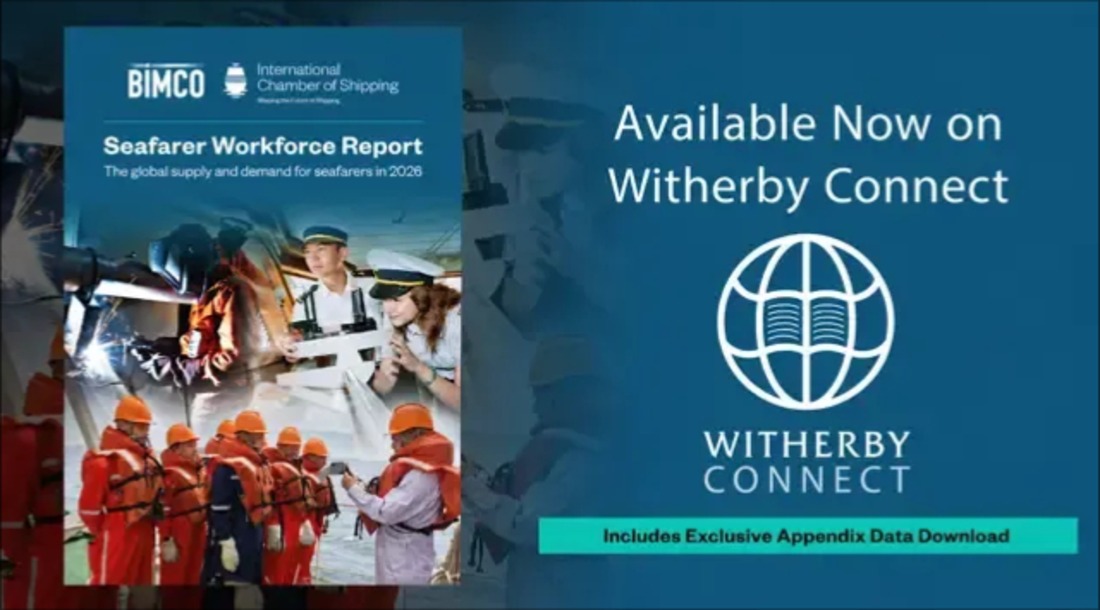
Global Shipping Faces a Shortage of 39,100 Officers, BIMCO/ICS Report Warns
 Careers & Jobs
CULines opens Turkey office as Eastern Mediterranean regional headquarters
 Careers & Jobs
Seafarers no longer carrying paper certificates!
 Careers & Jobs