Since late 2025, the MPP/Heavy Lift market has been sending a clear signal: across different owner groups and across different tonnage ranges, several representative players have, almost at the same time, leaned into the same design logic—a forward superstructure (accommodation and bridge moved forward) plus a long, ultra-flat, continuous, highly usable deck.
The underlying driver is not a shift in aesthetic preference, but a shift in commercial logic: as demand grows for new-energy cargoes—such as wind-energy equipment and energy-storage systems—these cargoes are increasingly reshaping what owners treat as the “core value anchor” of an MPP vessel.
In this context, owners are looking to turn more quantifiable and more repeatable deck capability into more stable cargo opportunities and more predictable earnings.
I. A Near-Simultaneous “Same Question, Same Answer”: Owners Across Tonnage Segments Converge on One Design Language
Wuhu Shipyard × Nordic Hamburg: 3+2 13,300-dwt MPP/Heavy Lift Newbuilds
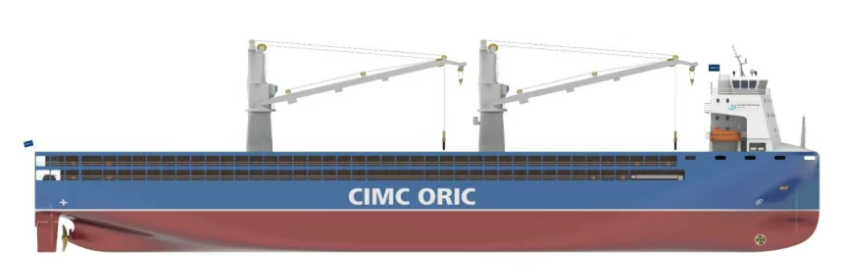
Wuhu Shipyard has announced that it signed contracts with Germany’s Nordic Hamburg Group and partners for 3+2 units of 13,300-dwt MPP/Heavy Lift vessels. The design positions the bridge and accommodation forward, adopts a hatchless concept, and features about 26,500 cubic meters of cargo space and 500-ton combined lifting capacity. The vessels are positioned to serve oversized project cargoes such as wind-energy equipment, while also meeting the more general requirements of conventional cargo transportation. The disclosed highlights include SCR systems, an optimized hull form aimed at meeting higher energy-efficiency and emissions requirements, fuel consumption claimed to be more than 20% lower than older vessels, ice-class capability, along with smart control systems and specialized safety design.
From a market perspective, this is a typical mid-sized heavy-lift MPP positioned as “project-cargo first, while retaining versatility”: rather than chasing an extreme single capability, it packages cargo flexibility, operational efficiency, and compliance certainty to serve more dispersed and higher-frequency project logistics scenarios.
Chipolbrok: 60,800-dwt Forward-Superstructure Newbuilds
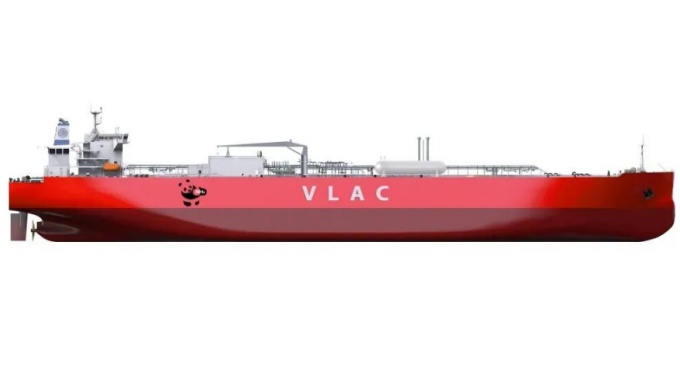
Chipolbrok’s 60,800-dwt forward-superstructure MPP newbuilds highlight a more “deck-driven” approach. By moving the accommodation and bridge forward, the design aims to release longer and more continuous deck resources, creating more combination space and improving loading efficiency for extra-long and oversized cargo. The capability focus includes strengthening deck strength, lifting configuration, and improving suitability for open-hold operations and for switching between project cargo and box-like cargoes, essentially turning “usable deck resources + operational efficiency + compliance certainty” into standardized, repeatable asset capability.
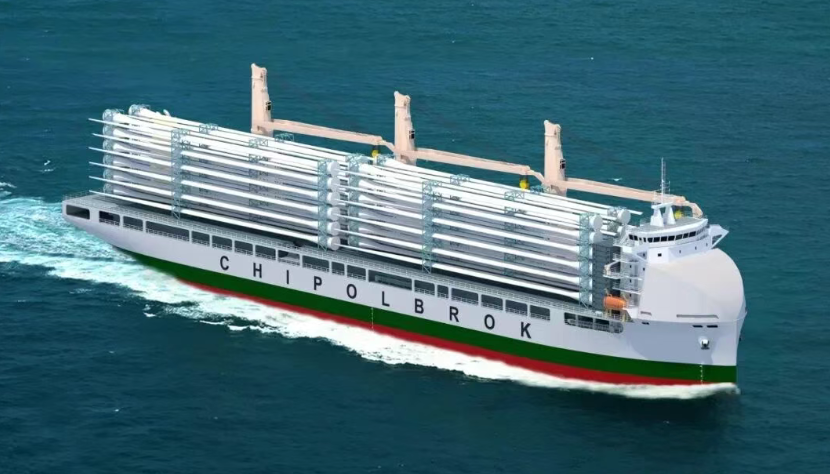
Based on what is shown in illustrations and disclosed materials, the direction is no longer simply “being able to carry project cargo,” but improving per-voyage utilization and project-delivery reliability—making the deck a more directly priced core capability in practice.
Haitong Development: Returning to Newbuildings, and What a “Similar-Type” Choice Implies
Haitong Development has returned to the newbuilding market after years and has invested in a new-generation MPP/Heavy Lift vessel, positioning the segment as a key move in its “second growth curve.” Notably, based on the information disclosed, Haitong’s choice aligns with Chipolbrok in capability direction—suggesting that “forward superstructure + ultra-flat continuous deck” is no longer an isolated owner preference, but is increasingly being recognized by more participants as a shared capability framework.
COSCO Shipping Specialized Carriers: 40,000-dwt Newbuilds to Complete the Mid-Sized Tier
COSCO Shipping Specialized Carriers has announced four 40,000-dwt MPP/Heavy Lift newbuilds at CSSC Chengxi, citing wind-power scale-up and expansion into deeper and farther offshore areas as key drivers. Public materials have not fully disclosed the detailed design; however, given the broader market trend, market participants have reason to infer that the design may also emphasize improving usable deck capability, optimizing cargo-handling flow, and strengthening efficient switching between project cargo and box-like cargoes.
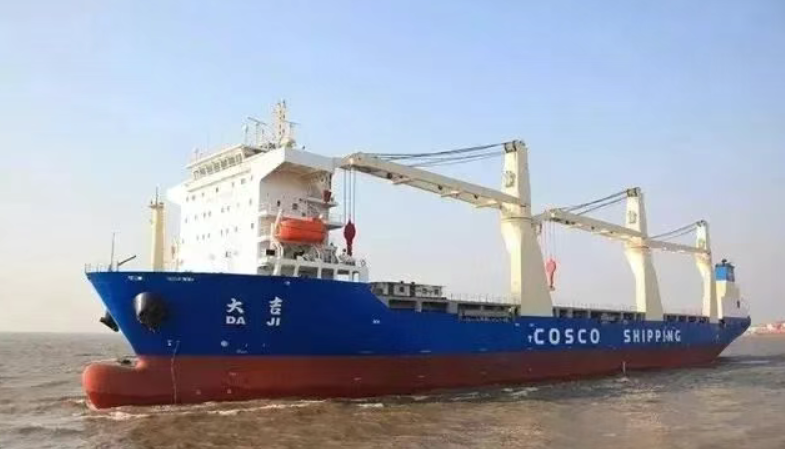
It is also worth noting that COSCO Shipping Specialized’s “Da” series previously adopted a similar forward-bridge concept with side-mounted cranes. The company has stated that the 40,000-dwt series will adopt an entirely new vessel type. This remains an inference based on cargo-structure logic and market trend; final details will depend on subsequent technical disclosures by the owner and shipyard.
II. Why Has “Forward Superstructure + Ultra-Flat Continuous Deck” Become So Popular So Quickly?
Traditionally, MPP competitiveness has been summarized around lifting capability, hold/hatch arrangement, and project operating experience. What new-energy cargoes are changing is more structural: larger wind components, more frequent project deliveries, and scaled exports of electro-mechanical cargoes such as energy storage are pushing MPP requirements in a more “engineering-oriented” direction—not only to lift and stow, but to stow faster, safer, and with higher compliance certainty, while switching efficiently between project cargo and box-like cargoes.
In this framework, the value of a forward superstructure and an ultra-flat continuous deck is magnified. The core benefit is not cosmetic; it effectively upgrades the deck from “carrying space” to something closer to a “directly priced capability” in commercial negotiations. The more continuous, flatter, and less obstructed the deck is, the more flexible the combinations of extra-long cargo and complex lashing become. Greater flexibility tends to lift per-voyage utilization and improve the controllability of port operations—turning “it fits” into “it fits and earns better.”
At the same time, “containerized in appearance but not equivalent to standard general containers”—including energy-storage units and lithium battery-related cargo—often comes with different risk attributes and operational preferences, and in practice can lean toward deck stowage for monitoring and response. As loading rules begin to shape vessel parameters, deck strength, deck layout, and operational access increasingly move onto the competitiveness checklist for newbuilds.
III. From “Vessel Upgrades” to “Route Opportunities”: Three Changes New Energy Is Opening Up
In an interview with Xinde Maritime News, Hannes Hollaender, Managing Director of Toepfer Transport, said China has been making significant efforts in carbon neutrality and emissions reduction, and that demand for renewable-energy infrastructure and project cargo is expected to continue growing.
In Xinde Maritime News’ view, new-energy project logistics is pushing the MPP market toward a new competitive form: vessels are no longer just one-off transport tools, but part of a project delivery system.
From “can carry” to “high-efficiency delivery”: the focus shifts from “can lift” to integrated efficiency—per-voyage utilization, port turnaround, and matching project windows.
“Box-like, but not general containers”: risk-control requirements encourage owners to embed rules into capability—deck-based organization, clearer working space, stronger deck strength, and more controllable emergency strategies.
From single trunk routes to regional, multi-point delivery networks: more dispersed destinations and multi-batch, multi-port delivery characteristics favor fleets that can switch flexibly and turn faster.
IV. Xinde Maritime News Observation: Not Just Expansion, but Reinvestment in “New-Energy Maritime Infrastructure”
Viewed together—Wuhu Shipyard–Nordic Hamburg’s 13,300-dwt orders, the concentrated moves by Chipolbrok and Haitong in the 60,000-dwt class, and COSCO Shipping Specialized’s 40,000-dwt mid-sized build-out—one industry message becomes clear: MPP/Heavy Lift vessels are increasingly becoming a foundational capability supporting the global movement of new-energy equipment and project logistics. Owners are not only expanding “quantity,” but expanding “capability,” and that capability is increasingly centered on deck resources, operational efficiency, and compliance certainty.
When cargo structure, loading rules, and route organization shift at the same time, future differentiation in the MPP market may be less about “how many ships” and more about whether asset capability is aligned with new-energy delivery logic. That is why the forward-superstructure and ultra-flat continuous-deck design has been “hot” recently: it is becoming one of the most direct—and more easily replicable—engineering expressions of that alignment.
Please Contact Us at:
media@xindemarine.com