SOE "team-ups" are no longer just about signing deals: From Chalco × CMES to COSCO SHIPPING Lines × XCMG, supply-chain competition is moving up a level
Over the past period, two cooperation agreements, signed in different parts of the industrial chain, tell the same story when placed on the same "global supply-chain stress map": as external uncertainty rises and cross-border chains become longer and more complex, the key variable for Chinese companies going global is shifting from "Do we have cargo? Do we have ships? Do we have a price edge?" to "Can we make the supply chain stable, resilient, and controllable?"
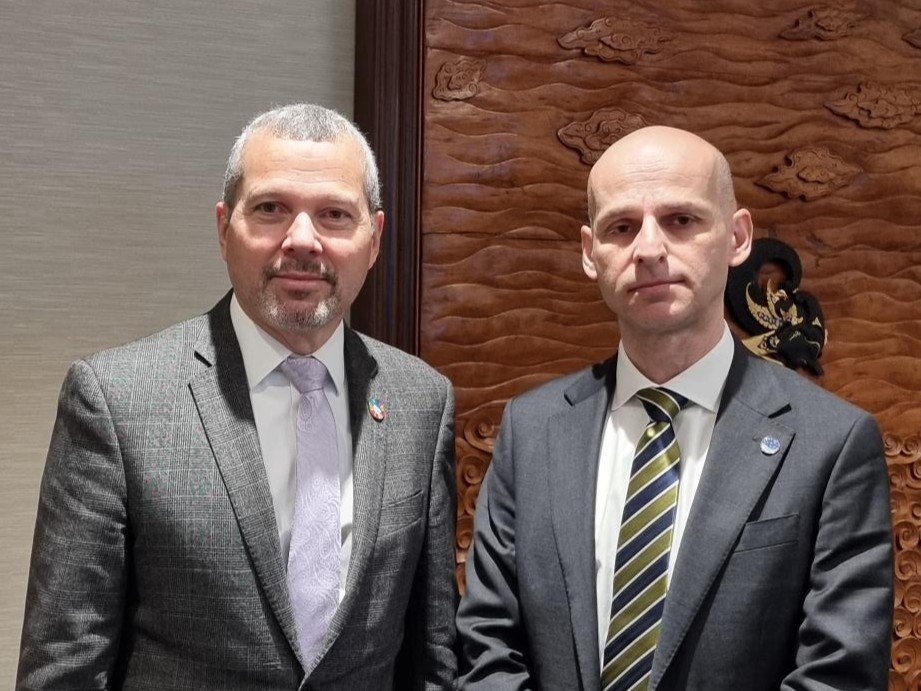
One deal is between Hong Kong Ming Wah (within the China Merchants shipping system) and Chalco Logistics, for a Guinea-related project. It points squarely to building a "secure corridor" for shipping West African minerals back home. The other is a strategic cooperation framework between COSCO SHIPPING Lines and XCMG Group. It explicitly covers deeper collaboration in technology innovation, cross-border logistics services, green supply chains, overseas business coordination, and joint development of digital platforms.
The contexts differ. The first is closer to bulk resources and inbound return corridors. The second is closer to high-end manufacturing, going global, and project delivery. The first emphasizes the reliability of shipping back to China. The second emphasizes the certainty of delivering to the site. But both answer the same question: as global logistics shifts from an efficiency race to a resilience race, how can shipping and logistics become foundational capabilities for Chinese companies’ global operations?
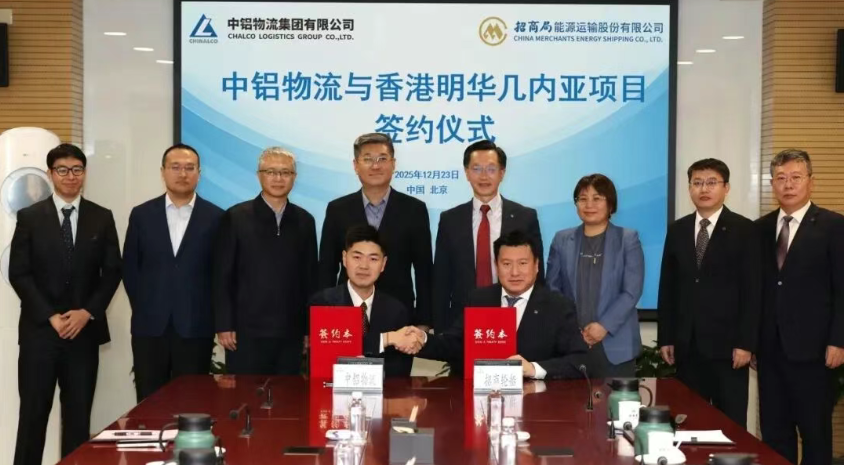
What these two types of cooperation have in common: From transport relationships to supply-chain partnerships
Looking at objectives, both forms of cooperation no longer treat transport as a standalone execution step. Instead, they treat it as a key variable that can determine whether an overseas project succeeds, how fast a company can scale abroad, and how much risk it is exposed to.
Chalco Logistics representatives have stated publicly that success in overseas mining projects depends not only on whether resources can be extracted, but on whether they can be shipped back safely and on time. The going-global logic for high-end equipment manufacturers like XCMG is similar: engineering machinery, especially oversized or specialized equipment, has high single-shipment value, tight delivery windows, and complex destination conditions. Once the logistics chain is disrupted, the impact is not just higher freight costs; it can directly affect contract performance, construction schedules, and brand credibility overseas. As a result, supply-chain stability, predictability, and delivery certainty are being elevated to the shared core issue.
That shift in the core issue is driving an upgrade in relationships. For a long time, the relationship between cargo owners and shipowners (or logistics providers) has been largely transactional, based on freight rates and capacity allocation, optimized for efficiency and cost. But under a volatile geopolitical environment, a local optimum often cannot withstand systemic shocks.
Chalco has argued for moving from a traditional "zero-sum" client–vendor relationship to a new partnership model of "value co-creation, risk sharing, and benefit sharing," calling for an integrated set of efficient, resilient, stable, coordinated, and sustainable supply-chain solutions.
The COSCO SHIPPING Lines–XCMG relationship shows the same trajectory. This is not a strategy discussion starting from scratch; it is built on years of project-based collaboration, covering heavy-lift moves, special container resource allocation, end-to-end coordination, and, during exceptional periods, dedicated taskforces and "green channels" to safeguard delivery of key projects. The meaning of the framework agreement is to institutionalize those hard-fight experiences into a normalized mechanism, upgrading ad-hoc resource coordination into repeatable and scalable supply-chain solutions.
More importantly, the yardstick for evaluating cooperation outcomes is changing structurally. Chalco has made it clear that cooperation should not be measured solely by freight rates, but by overall supply-chain stability, timeliness, responsiveness, and green value. XCMG's focus is more concentrated on delivery certainty and project controllability. Different words, same underlying new KPI: the ability to provide certainty in a world of volatility. As a result, competition will inevitably shift from freight rate competition to competition in assured delivery capability, increasingly reflected in long-term cooperation mechanisms, deep coordination arrangements, and stronger control over resources and nodes.
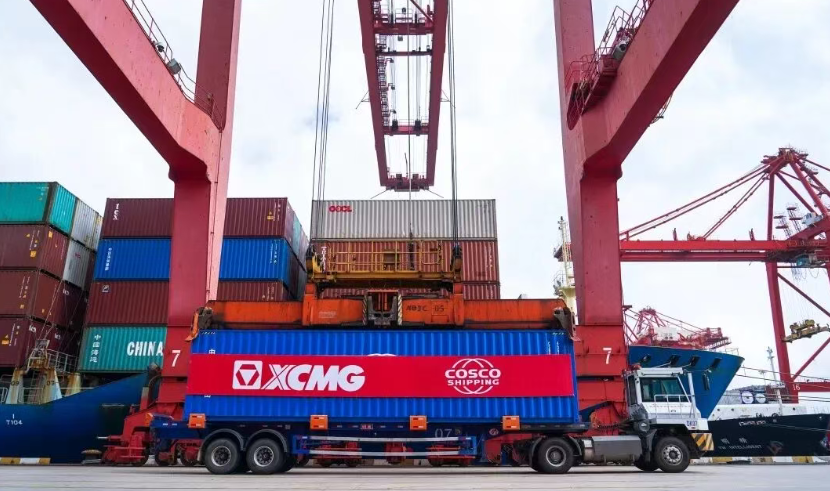
Three trends these agreements point to: Digitalization, asset-heavy arrangements, and green transition are accelerating at the same time
If certainty is the target, the first obvious path is deeper digitalization.
Chalco has proposed deeper data connectivity and sharing between cargo owners and shipowners: the shipowner provides richer voyage and operational data, while the cargo owner shares production and inventory plans. Together they build a transparent, trust-based "digital twin" of the supply chain to enable joint decision-making.
COSCO SHIPPING Lines and XCMG also wrote joint development of digital platforms into their cooperation agenda. The essence is the same: push the supply chain from being merely visible to being calculable, fast to coordinate, capable of early warning, and optimizable. When digitalization moves from visualization into shared decision layers, the role of shipping and logistics companies changes materially. They shift from capacity providers to providers of supply-chain operation and orchestration capabilities, able to link planning, loading, in-transit execution, exception handling, and delivery milestones into a manageable system.
The second trend is more asset-heavy and more long-term supply-chain coordination.
Chalco has proposed exploring capital cooperation, such as investing in dedicated vessels, green-fuel ships, or key logistics-node infrastructure, to build advantages that are hard to replicate. This reflects today's cross-border reality: when uncertainty rises, companies are more willing to trade long-term arrangements for greater control.
While the COSCO SHIPPING Lines–XCMG cooperation emphasizes end-to-end delivery and platform building, heavy-lift and special container capabilities are inherently resource-intensive and operationally demanding. The higher the cargo value and the stricter the delivery constraints, the more stable capacity and node assurance are required. Going forward, we may see more structured "cargo owner + shipping + logistics + finance/insurance" packages, no longer just bookings and freight, but joint design of capacity, nodes, and operating mechanisms to compress long-chain uncertainty into a manageable range.
The third trend is that green is moving from a concept to a hard constraint.
COSCO SHIPPING Lines and XCMG explicitly list a green supply chain as a cooperation direction; Chalco includes green value in the evaluation of cooperation. Behind this are overlapping forces: compliance requirements in international markets, customer ESG preferences, green financing constraints, and brand competition, all pushing green capabilities from a nice-to-have into an entry requirement.
For shipping and logistics companies, green capability will extend from the vessel side to the logistics system side: green shipping products, low-carbon transport solutions, verifiable emissions accounting and allocation mechanisms, and integrated energy-efficiency management across sea, port, and land will become essential components for long-term binding with high-value manufacturing customers.
Providing "system-level certainty" for Chinese companies going global
Yale University economics professor Aleh Tsyvinski said in a recent interview with The New York Times that his team used machine learning to identify key products and proposed a "critical supply disruption index." They found that supply chains for critical materials are hit harder, recover more slowly, and require longer stabilization cycles.
The reason, he noted, is that critical materials typically share four features: strong national-security relevance, high economic importance, low substitutability, and high external dependence. When major geopolitical or economic shocks occur, consumer-goods supply chains may bend but not break, while critical-material supply chains can experience long-lasting, deep, and persistent disruption.
He argued that what defines economic security going forward will be less about whether consumer goods trade becomes faster and cheaper, and more about whether critical materials can be obtained and transported in a reliable, controllable, and sustainable way.
Seen in a broader industrial context, the importance of these two cooperation agreements is not simply what SOEs signed with whom, but what they reveal about shared supply-chain requirements as Chinese companies' globalization enters a more engineering-driven, system-based, and long-term phase.
For resource-based central SOEs, real competitiveness is no longer only about resource endowments, but also about whether the return-shipment system is stable and controllable. For high-end manufacturers, the deeper the internationalization, the more it depends on end-to-end delivery as the operating backbone, meaning logistics must move up to the strategic level. For shipping and logistics central SOEs, growth is no longer just about fleet scale; it increasingly depends on deeper industrial binding and stronger supply-chain orchestration capabilities, competing for the position of "organizer" within the industrial chain.
In this context, the Hong Kong Ming Wah and Chalco Logistics cooperation reflects the corridorization and systematization of strategic resource return chains, while the COSCO SHIPPING Lines and XCMG cooperation looks more like a systematized global delivery model for high-end manufacturing. Together they form one picture: in a world of rising uncertainty, shipping and logistics are not passive cost items, but proactive sources of competitiveness; supply-chain stability is not merely an operations issue, but a strategic proposition for global expansion.
A more hard-nosed reality: Stable supply chains won't be cheaper, but they will be more valuable
At the industry level, one reality is increasingly clear: stability is not free. Higher certainty usually requires more resource redundancy, deeper node control, more complex coordination mechanisms, and higher management intensity. Unit transport costs may not look fully optimized, but overall cost uncertainty falls sharply, and project performance and delivery become more predictable. For global operations, that predictability often matters more than saving money on a single shipment.
It is also worth emphasizing that shipping and logistics moats are shifting from scale and price to organization and solutions. Ships and routes still matter, but what is scarcer is the ability to engineer solutions to complex problems: from planning to execution, from disruption to recovery, from single shipments to systems, from transport to delivery. As customer pain points shift from "freight is expensive" to "delivery is uncertain," the industry's competitive focus will shift accordingly.
Ultimately, global supply-chain competition will look more and more like system versus system. When the opponent is not just a manufacturer or a shipping line, but an integrated cross-regional supply-chain system, point advantages get diluted and system coordination gets amplified. The value of coordination among central and local SOEs lies precisely in using system capabilities to hedge external shocks, and in providing greater certainty for national strategic resources and the global deployment of "Made in China" through stronger supply-chain organization and assurance.
From the secure corridor for resource return shipments to the global delivery system for high-end manufacturing, what we are seeing is not two isolated signing stories, but a trend line gaining speed: shipping and logistics are shifting from transport competition to supply-chain capability competition; Chinese companies going global are shifting from product output to system output; and stable supply chains are shifting from an operational preference to a strategic imperative. In the end, what deserves attention is often not who signed another agreement, but how these agreements are redefining the boundaries of partnership, capability, and competition.
by Xinde Marine News Chen Yang
The opinions expressed herein are the author's and not necessarily those of The Xinde Marine News.
Please Contact Us at:
media@xindemarine.com