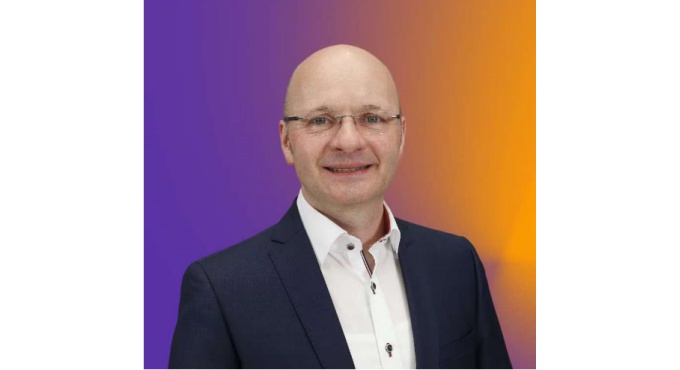
This has been a significant year for ClassNK and for Hayato Suga, who stepped up to the role of President & CEO in March.
Drawing on 40 years of ClassNK experience, the new CEO suggests shipping needs additional support from classification societies at a time when “boundaries between industries are becoming increasingly blurred due to environmental challenges and digital transformation”.
“It is our responsibility to work with customers to provide certification and related services in a timely manner that meet diverse and fast-evolving needs,” he says.
The responsibility applies to a class society whose register includes over 9,500 ships in 2025, served by 130 exclusive surveyor offices in 58 countries. Suga says he aims to make ClassNK more internationally competitive, expand its service portfolio and energize initiative-taking across the organization. A new Tech Expertise Centre in Piraeus, tasked with providing technical support beyond survey-related matters, offers a strong example.
“We are also focusing on expanding services relating to decarbonization, digitalization, and fuel certification in response to higher expectations,” says Suga. “The continuous emergence of new technologies demands that classification societies engage in thinking about and shaping what is coming next,” says Suga.
In one 2025 response, ClassNK added ClassNK Fleet Cost Simulation to its alternative fuel services to evaluate the regulatory costs of measures such as the FuelEU Maritime and the EU ETS.
Low emission life cycle
Looking at the bigger emissions picture, this year ClassNK also became Asia’s first provider of Sustainable Aviation Fuel certification, in support of International Civil Aviation Organization 2027 reporting requirements. The ClassNK Sustainable Certification Scheme is authorized by ICAO to verify third parties conform when certifying CORSIA (Carbon offset reduction scheme for international civil aviation) eligible fuels.
This capability is highly relevant for shipping, given that it builds ClassNK’s experience in the type of fuel certification scheme that is expected will evolve out of IMO’s life cycle assessment (LCA) approach to greenhouse gas emissions in the future.
“We are committed to helping shipping overcome its uncertainties on energy transition by providing accurate information, reliable technical assessments and certification,” comments Suga.
Industry in transition
The society is no less energetic where more immediate needs are concerned, says Suga. ClassNK Transition Support Services are increasingly proactive on energy efficiency, alternative fuels, GHG emissions management and smart ship technologies.
In one example, ClassNK added Japan's first hydrogen-fuelled tugboat to its register in October – in the shape of TEN-OH, built by Tsuneishi Shipbuilding Co., Ltd. ClassNK reviewed the Nippon Foundation Zero Emission Ships Project vessel for safety.
Ship retrofitting is a further key area for attention. “The main challenge here lies in modifying legacy systems while ensuring technical integrity and safety, and that is an area where our expertise is well suited,” says Suga.
But ClassNK has also taken a leading position in ensuring that ships continue to live up to environmental requirements at the end of life. ClassNK proactively engaged supporting implementation of the Hong Kong Convention long before it came into force in June this year – and even prior to its adoption in 2009.
To date, ClassNK has certified over 70 recycling yards and issued approval for Inventory of Hazardous Materials (IHM) for more than 5,000 vessels. Furthermore, its PrimeShip-GREEN/SRM ship recycling management software tool has become the de facto industry standard for the IHM.

by Xinde Marine News
The opinions expressed herein are the author's and not necessarily those of The Xinde Marine News.
Please Contact Us at:
media@xindemarine.com